
Why dry willow is the best starting point for people new to natural crafts
18 August 2026
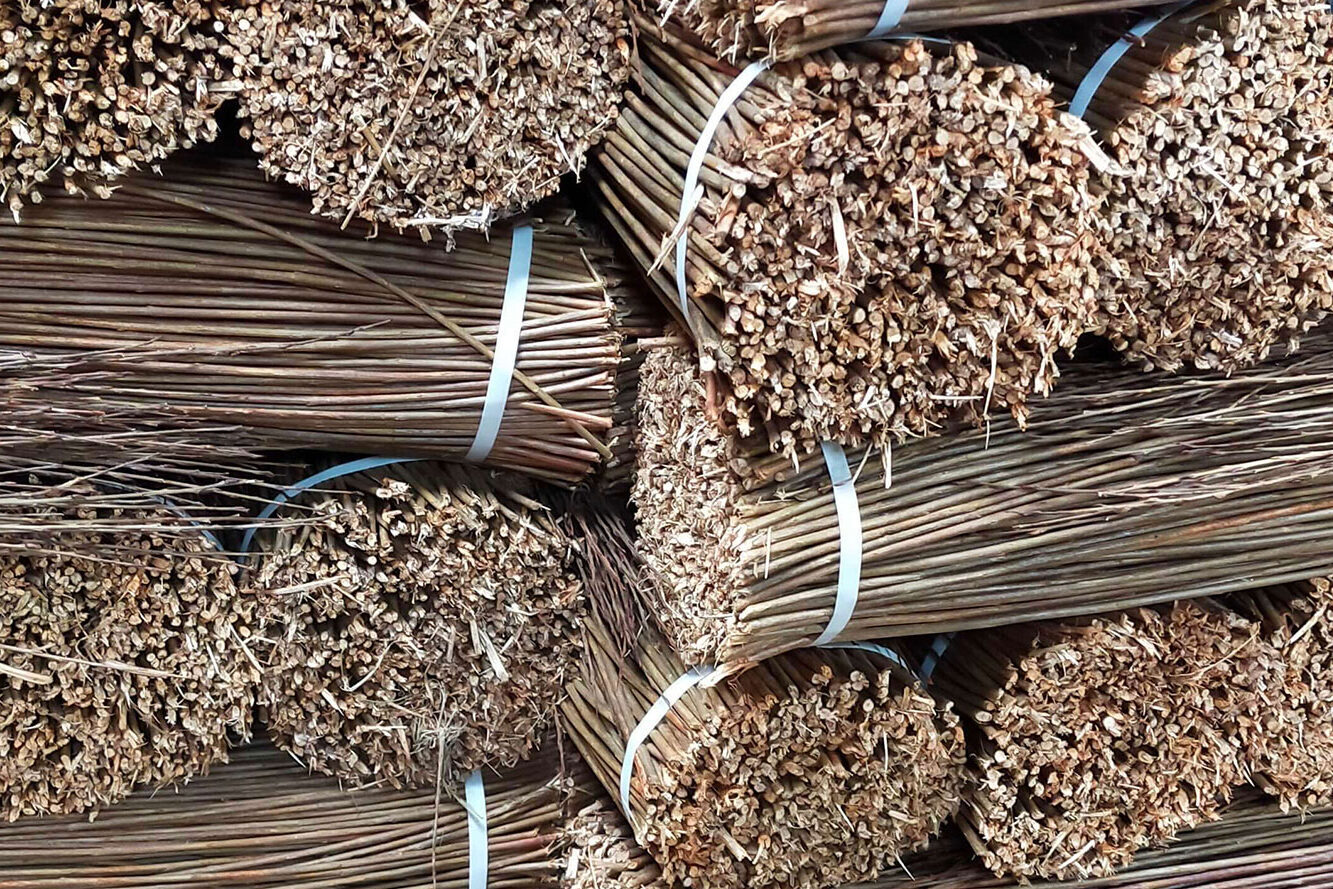
Hands-on crafts that involve working with natural materials, like willow, are becoming increasingly popular. Whether it’s a glorious summers’ evening or a cosy dark night in the depths of winter, willow weaving is a mindful, rewarding practise.
Dry willow
Musgrove Willows have been growing award-winning willow on our family farm for over four generations, and preserving the art of willow weaving is a passion of ours. There are many different avenues of willow craft to explore; working with dry willow is one of the ideal entry points into natural crafting.
Dry willow (also called brown willow) is willow that has been dried with its bark left on, which protects the rod from the elements. This makes dry willow suitable for all types of basket weaving, and particularly suitable for outdoor baskets and willow sculptures.
Why to use dry willow when getting into weaving
1. Beginner-friendly willow types
We grade and sort our dry willow by hand into bundles and bolts. The thickness, colour, and flexibility of dry willow rods can vary hugely between the different varieties. This selective breeding makes it easy to choose willow varieties that have been specifically bred to grow long, straight, slender rods ideal for beginners to work with.
A good example is Black Maul, one of the dry willow varieties we grow at Musgrove Willows. Supple and versatile, this high quality basketry willow is a great entry point for weavers new to the craft. Longer rods are thicker; a 6ft Black Maul rod is about the same thickness as a pencil.
Another excellent choice for beginner basket weavers is Dicky Meadows. The fine rods of this sleek willow are generally very straight and taper off quickly, making it enjoyable to weave with.
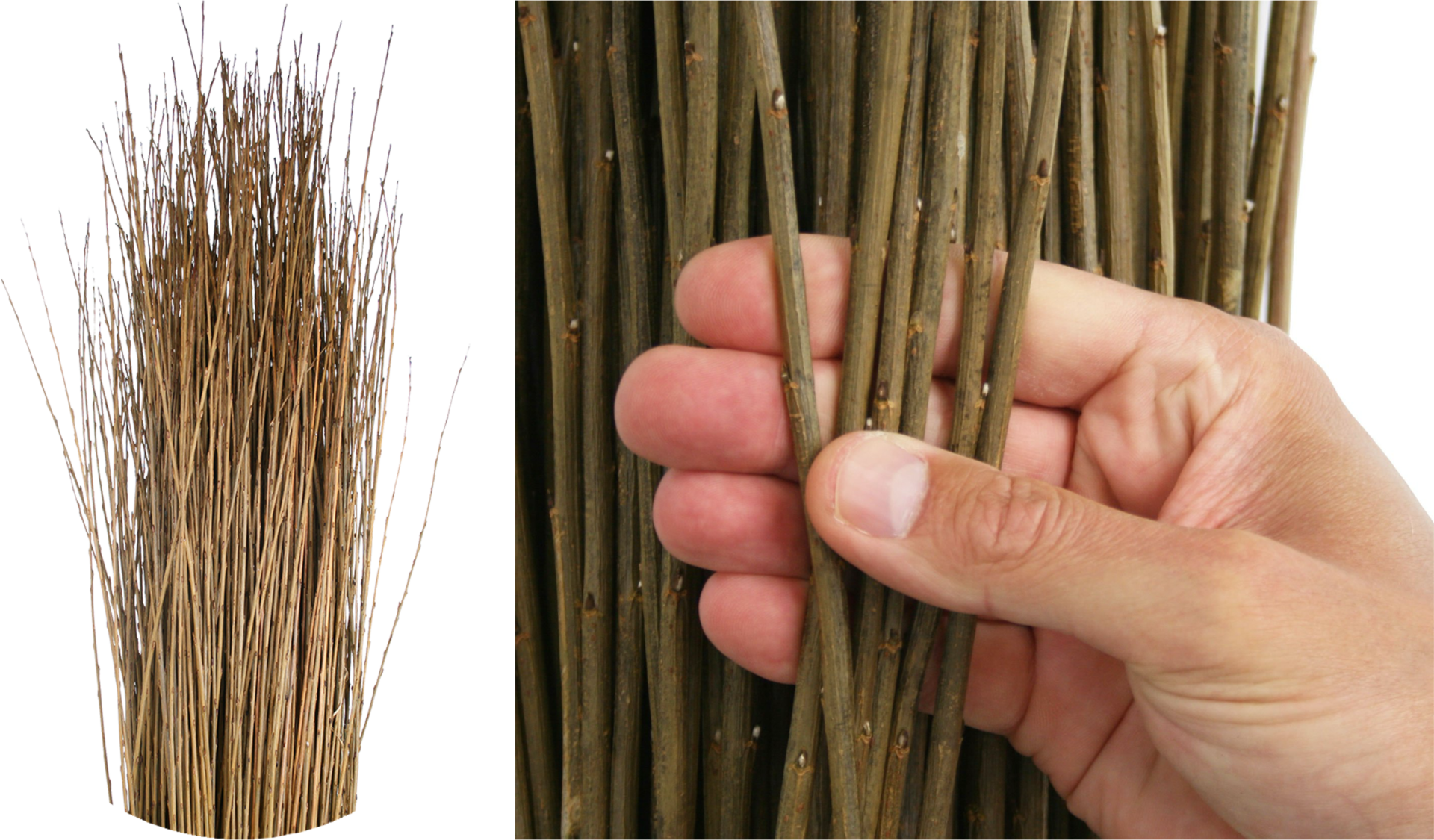
Dry willow varieties suitable for beginners: Dicky Meadows (left) and Black Maul (right)
2. Pre-shrunk and stable
Dry willow is a far more forgiving willow for beginners weaving with natural materials for the first time. Unlike fresh-cut green willow – which is liable to shrink and loosen the weave being worked on as it dries out – dry willow is pre-shrunk.
Because it has already undergone its main shrinkage phase, dry willow – once correctly soaked – provides fantastic stability when weaving. This helps ensure a finished craft is tight, neat, and keeps its intended shape. The visibly good results that can be made from a dry willow weave, even on a first attempt, are very encouraging for beginners, and inspire them to progress to other weaves.
3. Availability and suitability for learning
Depending on the harvest and the weather, dry willow is usually in season from May through to November – perfect for both summer and winter crafting.
With the correct storage and soaking, dry willow becomes incredibly pliable and easy to work with, whilst retaining its strength and structural integrity. This is ideal for beginner weavers to learn and experiment with, and get a feel for working with willow.
4. Lots of ways to learn
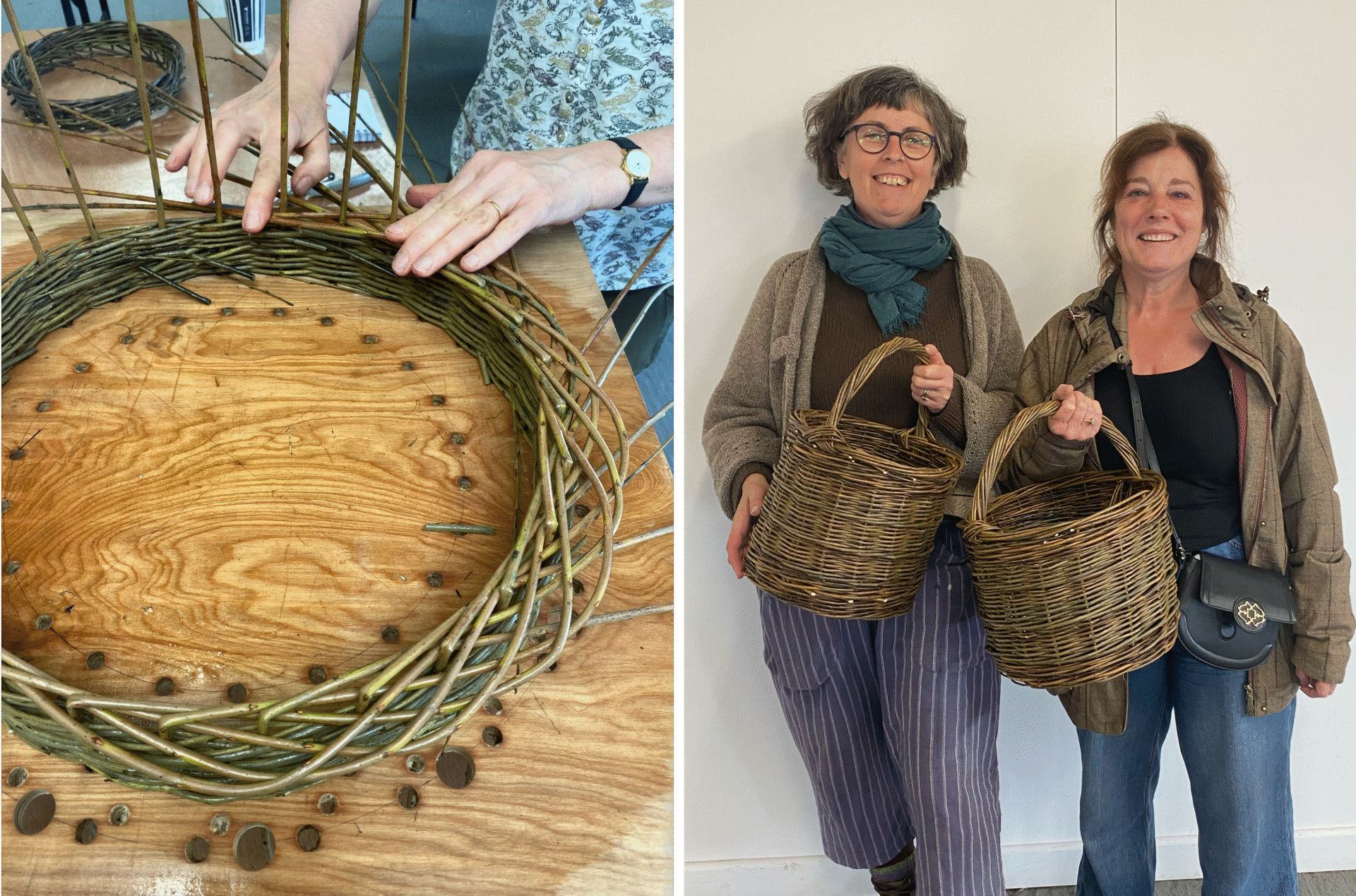
When starting a new craft, everyone learns at their own pace and in their own way. Alongside all the tools and equipment needed to get started with dry willow weaving, we stock handy books and gifts ideal for beginners, including:
- Willow tool kit: The perfect set of quality tools and materials for new weavers.
- Willow Projects for Beginners by Wendy Thorner: A full colour book clearly depicting 17 different projects, from baskets to willow art (also included in the willow tool kit).
- Willow Craft: 10 Simple Projects by Jonathan Ridgeon: A great guide to making simple willow craft projects other than baskets.
Alternatively, our willow weaving courses, held on the Musgrove family farm in Somerset, are also a great introduction for aspiring crafters. Every course is led by a friendly, professional tutor, with full materials supplied, a dedicated classroom, and a tasty home-cooked lunch.
We help beginners get started with willow weaving
To find out more about our courses, willow products, or gifting a course to a loved one, just get in touch with the Musgrove team – we’d love to hear from you.


