
Why willow quality matters as your weaving skills develop
21 September 2026
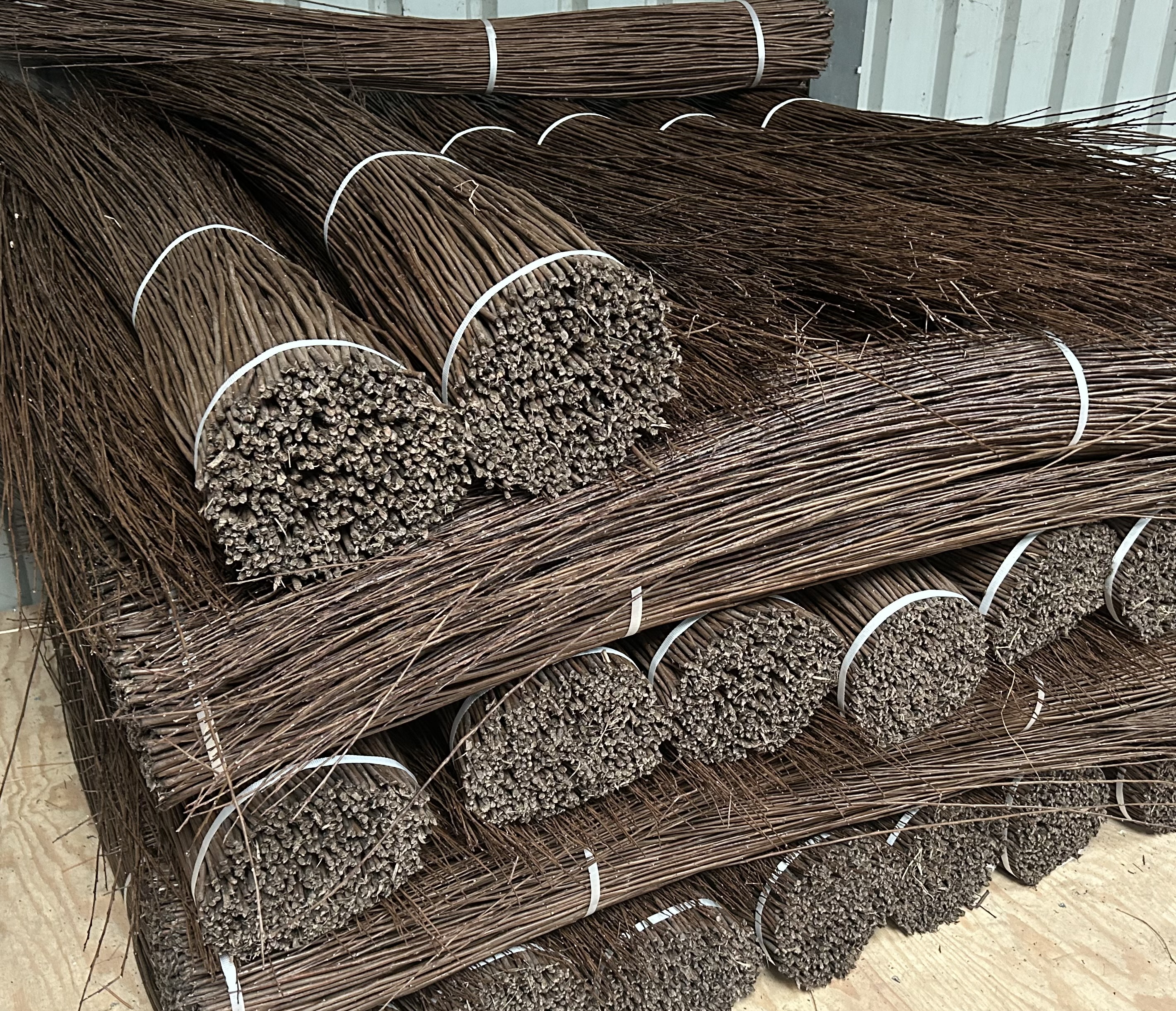
Completing your first willow weaving project is hugely exciting; and once you’ve caught the willow weaving bug, you’ll be keen to get stuck into another project. Dry willow is a great material to use for early willow weaving projects, because it is:
- Readily available from late spring through to winter
- Pre-shrunk and stable, leading to tight, consistent weaves
- When correctly soaked and mellowed, flexible and enjoyable to work with, making it a good choice for both new and experienced weavers
As you progress as a weaver, you’ll begin to understand how the variety, length, thickness, taper and other characteristics of the willow can affect both the weaving experience and the finished project.
At Musgrove Willows, all of the willow we sell is good-quality willow, grown, harvested and carefully sorted for weaving and craft use. As your skills develop, it isn’t about moving from lower-quality willow to better-quality willow, but learning how to choose the right willow for the job.
Why good-quality willow matters for beginner weavers
When trying willow weaving for the first time, using good-quality, suitable willow can actually make the process of learning easier. Rather than struggling unnecessarily with unsuitable material, you can concentrate on developing your technique, controlling the rods and getting a feel for whether weaving is for you.
This is also why willow weaving courses are a great option for first-time weavers. At Musgrove Willows, we host a wide range of courses on our Somerset willow farm, many of which are ideally suited to beginners with no weaving experience. Attendees get to work with good-quality willow grown right here on our farm and selected to suit the project they are making, with a tutor on hand to help guide them through their first weave.
Why choosing the right dry willow matters
Whatever route you choose into willow weaving, as you progress and work on your skills, the variety and characteristics of the willow you use will become increasingly important.
All Musgrove willow is grown and selected with quality in mind. As your experience develops, you are likely to become more selective about the particular variety, rod length, thickness and taper you choose for different projects and different parts of a weave.
1. Create consistent weaves
Dry willow has already undergone its main natural shrinkage during drying. Once it has been soaked for the correct amount of time and allowed to mellow appropriately, dry willow becomes flexible enough to weave.
Using correctly prepared dry willow also helps to create a tight, neat, finished weave and reduces the amount of further shrinkage once the project has been completed.
As your skills develop, carefully sorted willow also allows you to become more selective about the rods you use, choosing appropriate lengths and thicknesses for different parts of your project.
2. Choose willow suited to your project
Another positive thing about learning with good-quality dry willow is that you can begin to explore the characteristics of different willow varieties.
Willow isn’t simply “willow”. Different varieties have their own characteristics, natural colours, growth habits and weaving qualities. Some produce long, slender rods, while others have a quicker taper or other characteristics that make them particularly suitable for certain types of basketry and weaving.
- Black Maul: Black Maul is one of the dry willow varieties we grow at Musgrove Willows. It is a traditional basketry willow producing long, slender rods and is widely used for high-quality basketry and other woven work.
- Old French: Old French is from the same willow family as Black Maul and of a similar thickness. A flexible willow with a warm, yellowish colour, Old French is suitable for weavers of all abilities and great for basketry work.
As your experience grows, experimenting with different willow varieties is part of developing as a weaver and helps you discover which willow best suits your technique and the project you are making.
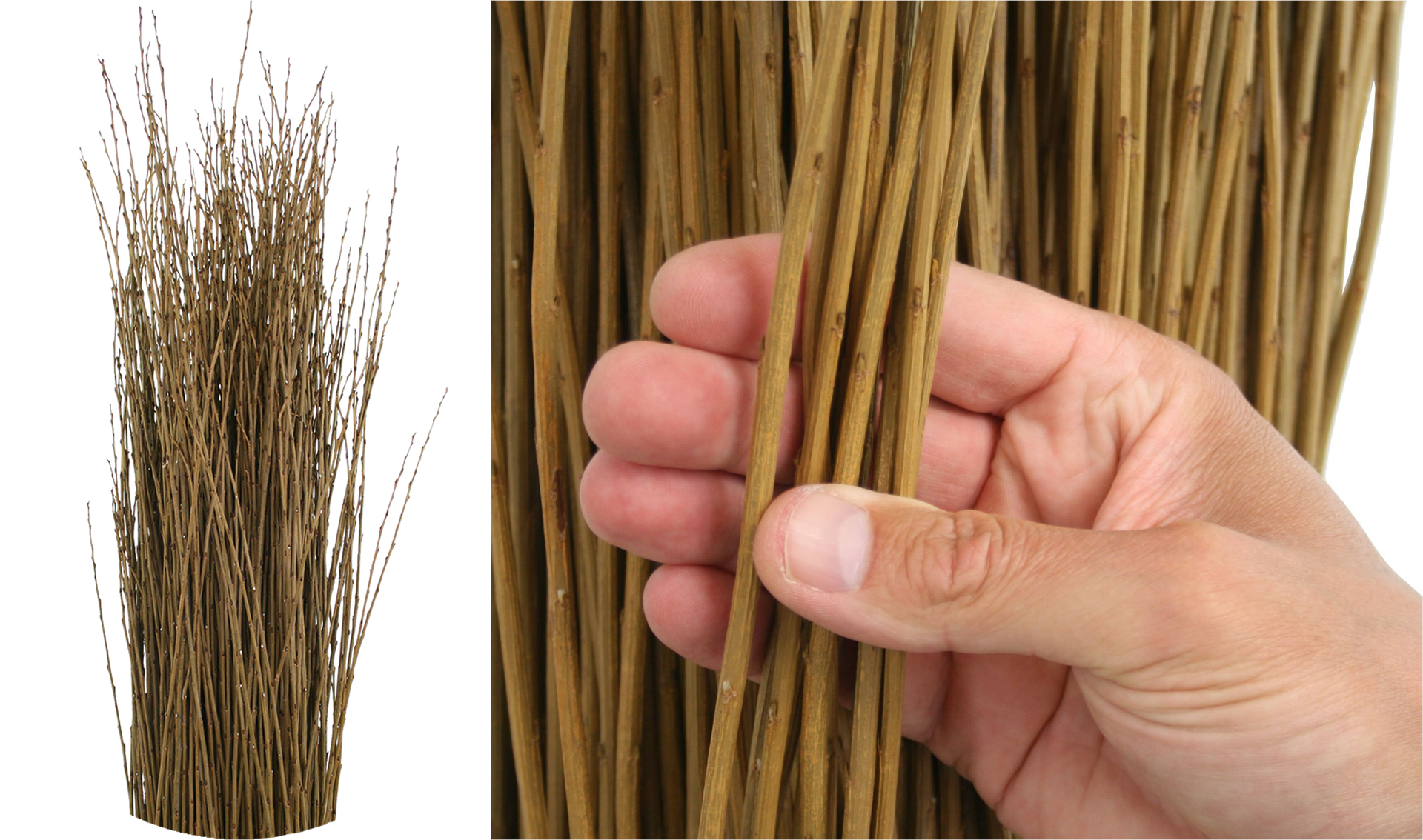
Dry willow varieties: Dicky Meadows (left) and Old French (right)
3. Skill progression
Using well-grown, carefully sorted willow and selecting varieties suited to the work you are doing can help you build your skills and progress as a weaver.
Good-quality willow allows you to concentrate on developing your technique, including tension, spacing, shaping and consistency. Well-grown, carefully sorted and correctly prepared willow should also be easier and more consistent to work with, helping to minimise avoidable splitting and breakage.
As a natural material, however, willow can still split or break. Correct soaking, mellowing, storage, rod selection and weaving technique all influence how an individual rod behaves. Learning how willow feels and responds as you work with it is an important part of developing your skills.
Dry willow also offers an aesthetic consistency in colour and neat lines, further adding to weaving satisfaction and encouragement.
Good-quality willow and good technique both play an important part in a successful weaving project. Good material doesn’t replace good technique, but choosing willow that is suitable for the job gives you a much better opportunity to develop that technique.
4. Make better use of your willow
Choosing suitable, properly sorted willow and preparing it correctly can also help reduce unnecessary waste during a project.
Willow can break for a number of reasons, the main cause being lack of mellowing. Other reasons for breakage include insufficient soaking, incorrect preparation, storage conditions or simply asking too much of a particular rod. Choosing the right variety and size for the work, and preparing it correctly, can help minimise avoidable breakages and allow you to make better use of the willow you buy.
As your skills develop, you’ll also become better at selecting individual rods for different purposes within a project. Rather than treating every rod in a bundle in exactly the same way, you begin to recognise which rods are best suited to particular sections of your work.
If you’re unsure which willow you need, we’re always happy to help you choose an appropriate variety, length and quantity for the project you’re planning.
We grow and supply good-quality willow for every level of weaver
Musgrove Willows is a fourth-generation family business, growing and working with willow on the Somerset Levels.
Whether you are buying willow for your very first project or you are an experienced professional basketmaker, the quality of the willow we supply does not change. What changes is your knowledge of the material and your ability to choose different varieties, lengths and sizes to achieve the result you want.
Because we grow willow ourselves, we understand the different characteristics of the varieties we supply and can help you choose willow that is appropriate for the work you want to create.
If you have any questions about our willow, weaving courses, tools, or other willow products, please just get in touch with the Musgrove team. There’s also lots of willow and weaving information on our Help and Advice page.


