
How to sort half bundles and bolts of willow
21 October 2025
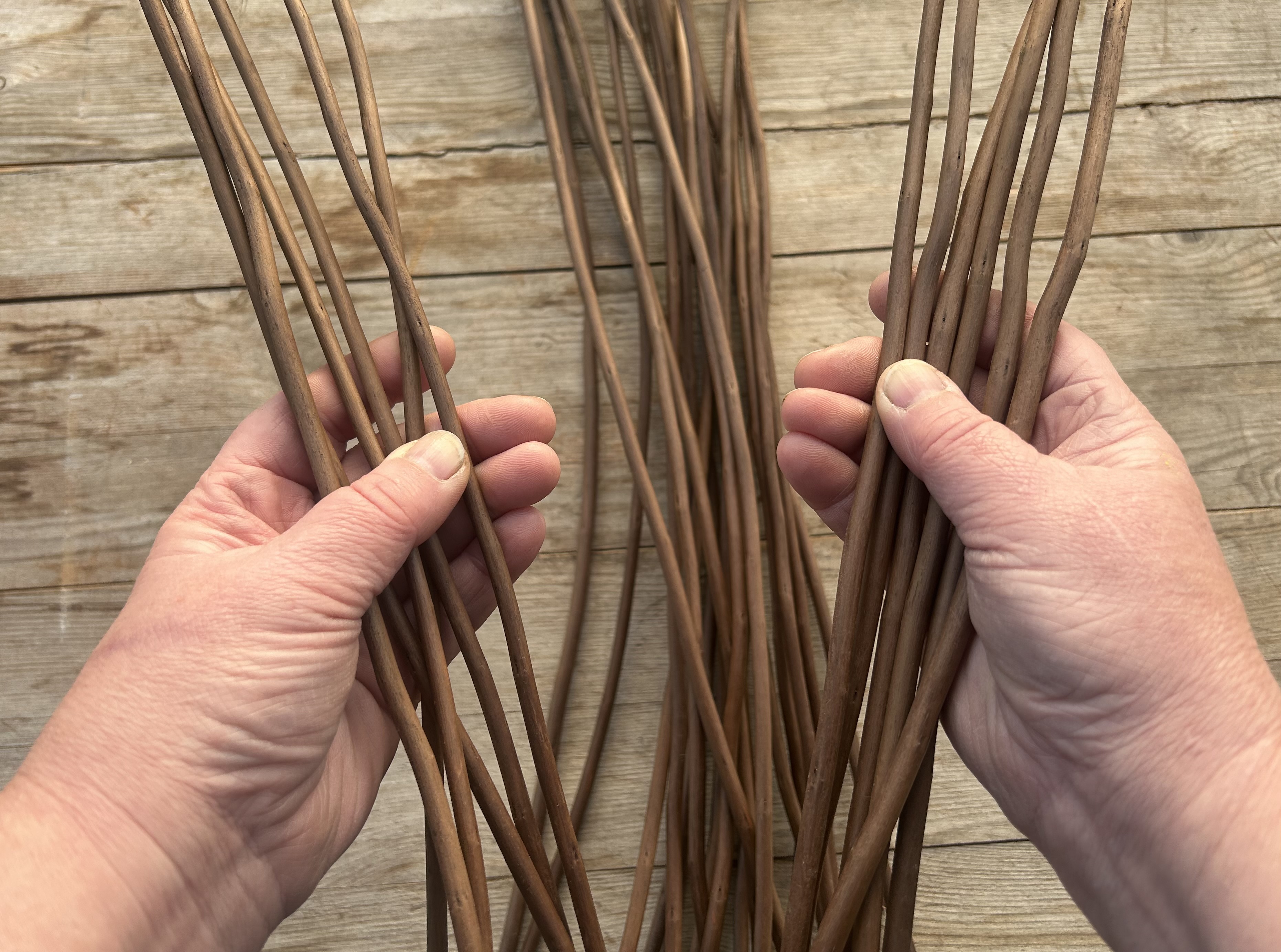
Starting a willow project? Before you begin, it’s important to know how to sort your willow rods. This will likely involve sorting out a half bundle/bolt of willow.
What is a half bundle/bolt of willow?
A traditional Somerset bundle (or bolt) of willow measures 1ft in diameter and 3ft 1 to 2 inches in circumference around the butt (bottom) end.
Willow is sold by weight, and there may be occasions when the weight of willow varies by half a kilo. This is down to the type of willow and/or time of year. When a rod length is selected, the weight of the willow will always be clearly displayed.
As a full bundle is quite heavy, you are usually supplied with two half bundles tied individually – which is why it’s useful to know how to sort a half bundle, as this is likely what you’ll be dealing with.
Bolt and bundle weights vary for different types of willow:
- Brown willow bundles and bolts
- White willow bundles and bolts
- Buff willow bundles and bolts
- Buff Noir willow bundles and bolts
- Steamed willow bundles and bolts
- Fresh cut willow bundles and bolts
Why do you need to sort your willow?
Sorting willow rods is done in preparation for making. When starting any willow project, you need to decide what willow you need for the ‘recipe’, including:
- Type of willow
- Length of rods
- Thickness of rods
- Number of rods
For example, to make a round willow basket, you will need:
Part of the basket | Number/thickness of rods | Length | Type of willow |
Base sticks | 6 thick rods | 5ft | |
Base weavers | Approx 20 medium/thin rods | 4ft | |
Uprights | 24 thick/medium rods | 5ft | |
Upsetting/waling | 18 medium/thin rods | 4ft | |
French rand | 24 medium/thin rods | 4ft | |
Top wale | 18 x medium/thin rods | 4ft |
Each different part of a basket (or sculpture) needs rods with different weights/thicknesses to ensure strength. Thicker rods are for base sticks and uprights, medium and thin rods for weavers. It also depends on the weave, and/or the shape of the basket, and the position of the weave in that basket.
Sorting willow ahead of starting your project will:
- Ensure you have enough willow to complete your project
- Reduce wastage
- Prevent you from soaking too much or too little willow
How to sort your willow
1. Height
At Musgrove Willows, we grade and sort our willow by hand according to height – but there will be some degree of variation (half a foot either side).
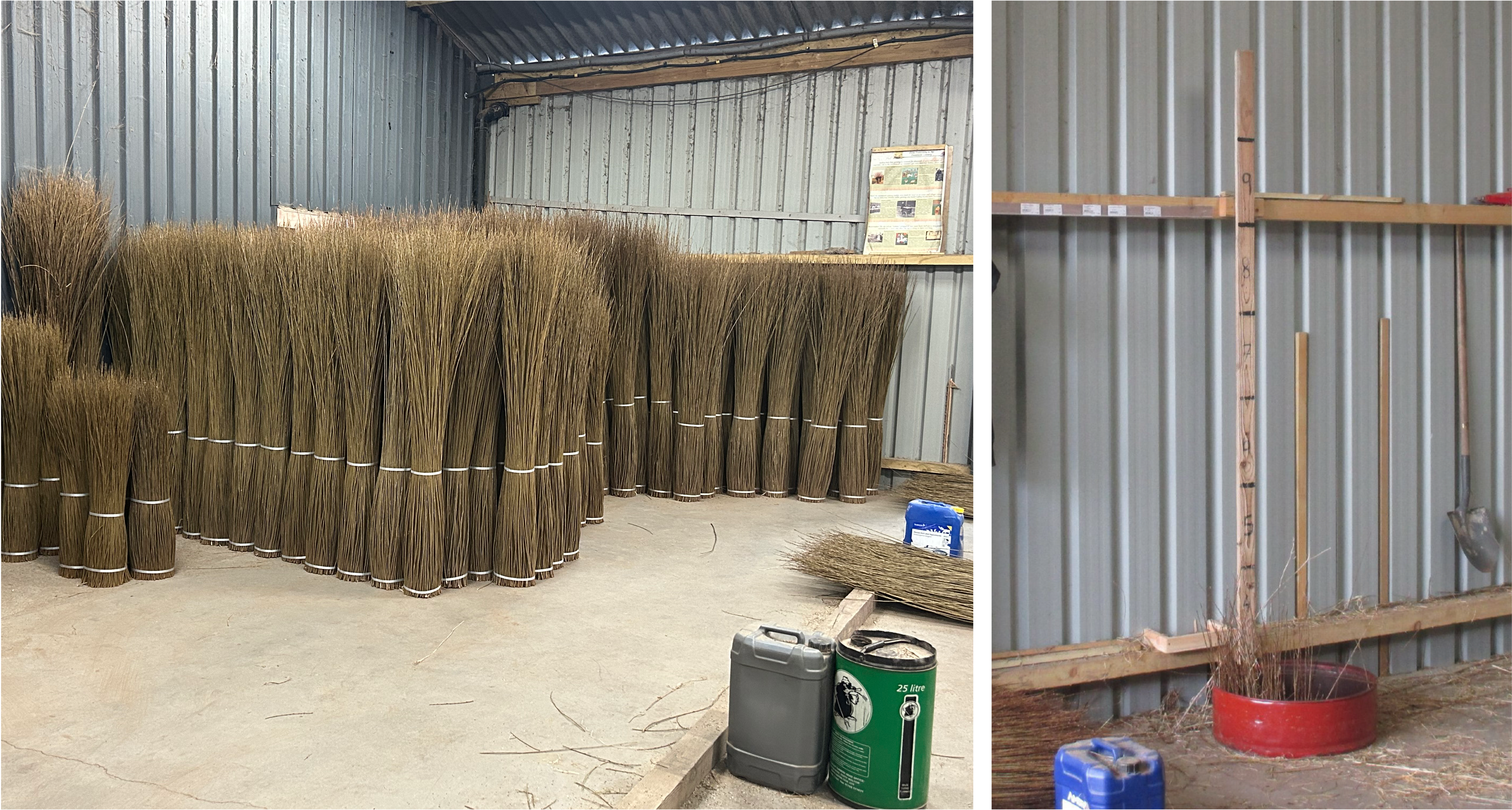
You don’t always need to sort by height, but sometimes it can be useful. If you’re completing certain weaves (e.g. French randing), it’s a good idea to have all the rods a similar size.
To sort by height, take each of your three bundles (once sorted for thickness – see under next heading) and tamp them down on the floor butt end down. Then you can easily identify any discrepancies in the height and split the bundle down further into height order, as well as thickness at the butt end.
2. Thickness at the butt end
Most people grade their willow into three thicknesses: thick, medium, and thin (some to five or more).
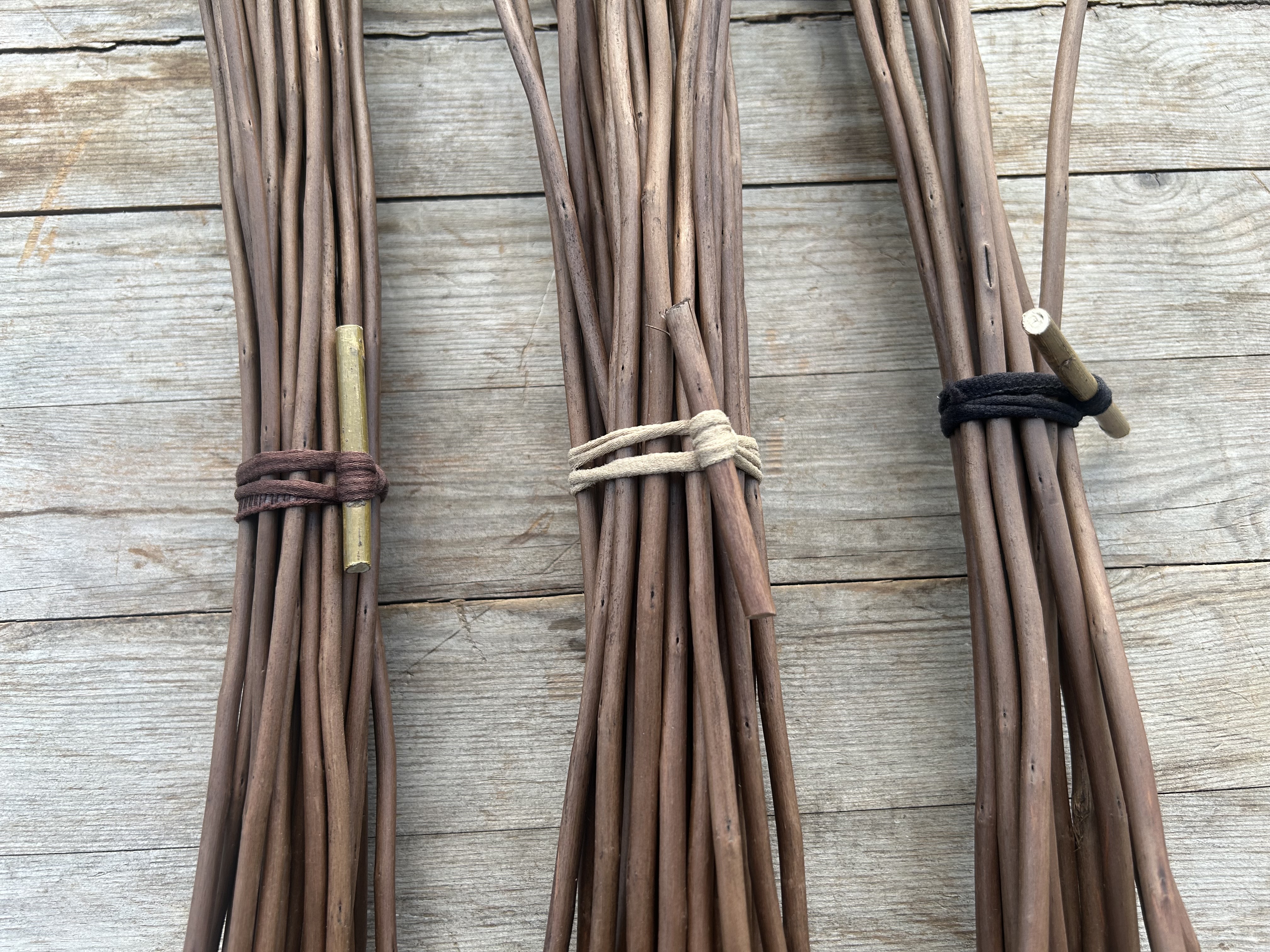
- Take a handful of your willow at the butt end. Pick out the thickest of the rods and place them in one pile.
- Pick out the thinnest rods and place them on a second pile.
- The willow you are left with are the medium rods, place those on a third pile.
- Continue working through your bundle until you have sorted all your willow into three piles.
3. Appearance and imperfections
As willow is a natural product, there may be some variation in colour. Bark on willow is dried outdoors on lines, so some rods may have been exposed to more sunlight than others.
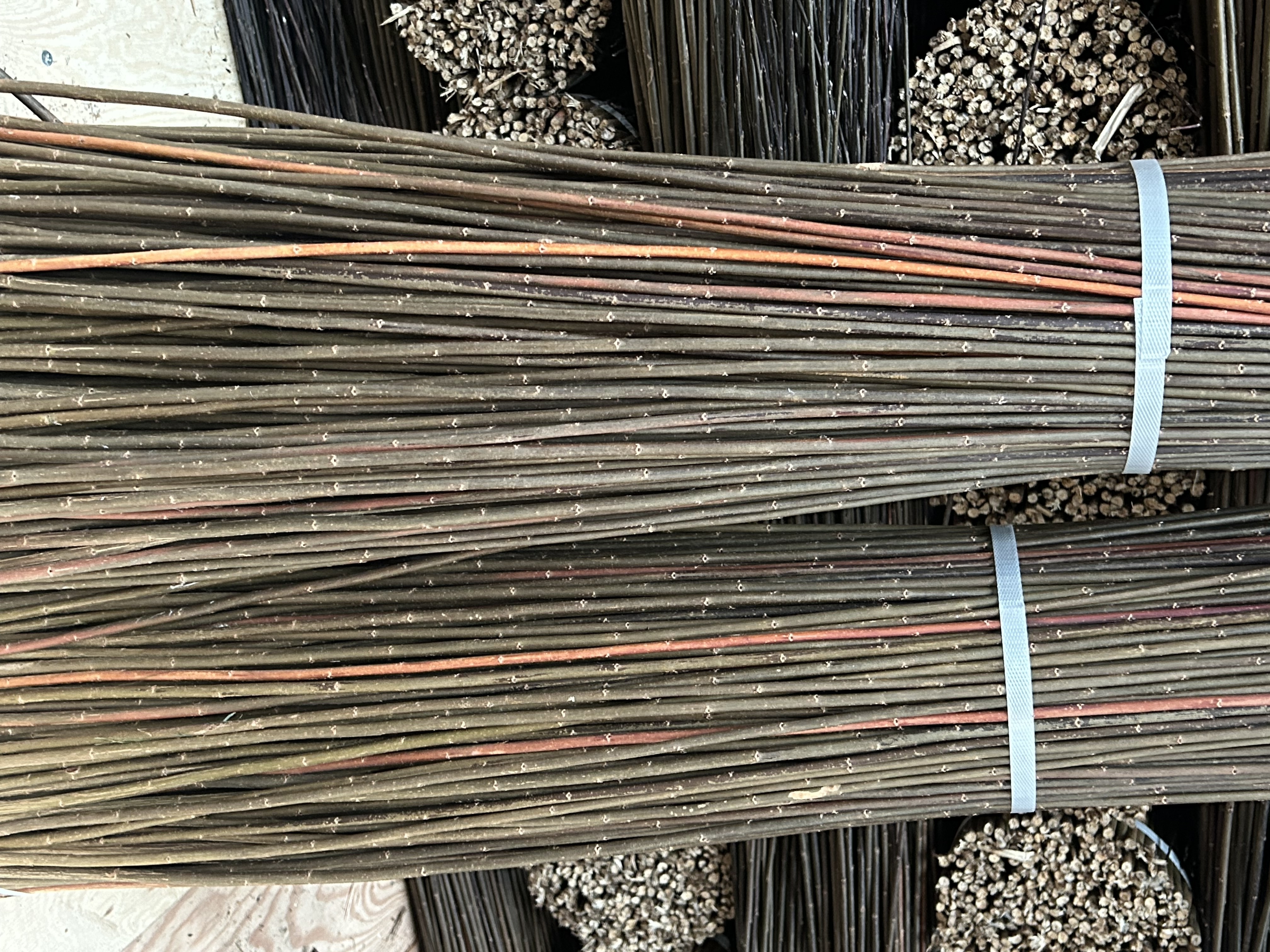
Some rods may be branchy, forked, discoloured, or nibbled by insects; it is perfectly normal to find some ‘reject’ rods in a bundle. As you sort your willow, set these rods aside – you will always find another project they are useful for.

Willow rods drying in the sun
How to bundle your sorted willow
A few top tips on bundling and labelling your sorted willow:
- Willow can be bundled and labelled well in advance of starting your project.
- Labels made from recycled plastic lids – written on with permanent marker and tied to the willow with string – are a great idea, as the willow can be put into soak and still be identified.
- Be careful not to tie your willow with metal wire, as this can discolour the willow.
- You also shouldn’t tie your willow up too tightly. Tying willow slightly loosely allows airflow around the willow while it is stored, and enables water to permeate when soaking.


