
What can I use green/fresh-cut willow for?
15 January 2026
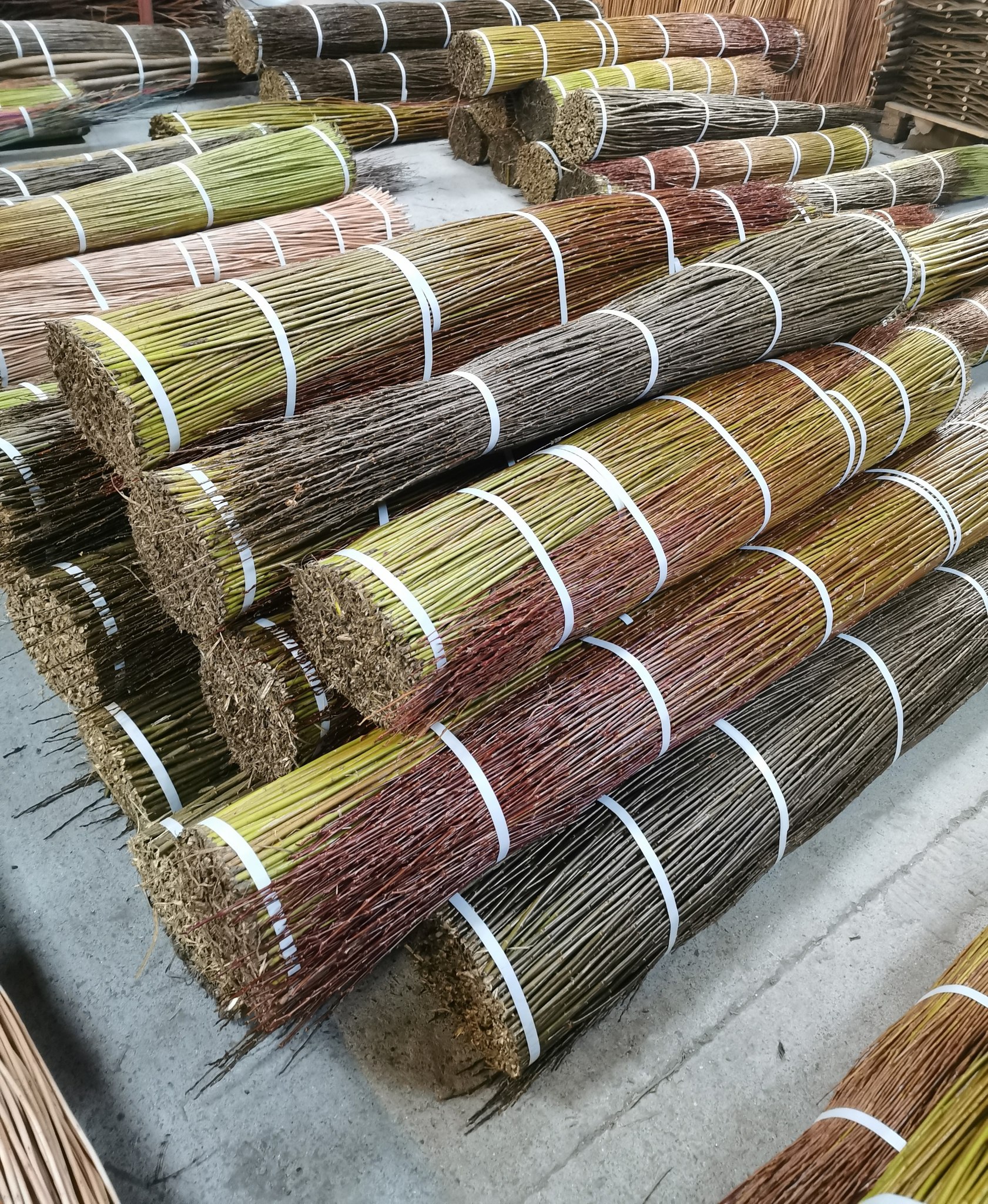
Learn everything about Fresh-cut/green Willow
Fresh-cut/green willow is willow that has been recently harvested (again, after leaf off in late winter through to early spring), but it is not placed in water, as the intention is for it to begin to dry out.
The colours are particularly vibrant in fresh-cut/green willow. Rods are very flexible and do not require soaking. The colour and thickness of the rod can vary significantly by variety. As they dry, the colour changes and develops.
Importantly:
- as it dries, it becomes semi-green or semi-dry (one and the same thing)
- whilst it has started on the drying process, it still has a long way to go
- as it dries, it shrinks
- green willow weighs more than dried, so the rod count per kilo is lower- check this when ordering if you need a specific rod count for a project
Green willow is not the same as living willow, and it may not be suitable for planting, depending on when it was cut and how long it has been stored before sale.
There is no guarantee it will strike if planted.
You can only use it when:
- the willow is well into the drying stage and is starting to change colour and become firmer
- shrinkage doesn’t matter in the item being made
- shrinkage can be compensated for later
- the weave is gentle, or you require a hoop or curve, and no sharp corners or turns are needed
Ideally, wait a few weeks before using it, so it’s in its semi-green/semi-dry state.
You can’t use it for:
- formal basketry weaving, where you need the weave to be tight
- weaves which require turns or tight spaces (zig-zag French, for example)
- bordering, where you need the willow to kink, not crack, or split
- bases which need to be strong and tight
What can I make with green willow ?
Garden panels or garden edging
You can make willow garden panels or garden edging, and compensate for any shrinkage by compressing the weave as it shrinks to firm it up.
Ensure that any uprights for this type of work (usually sticks) are dry or nearly dry, as the panel will be loose.
Any uprights driven into, or in contact with, the ground need to be put in upside down, or de-barked a few inches from the surface of the ground, to ensure they do not strike.
Seasonal or celebratory wreaths
Shrinkage in wreaths often doesn’t matter because they are usually bound with other materials or are short-lived. Winter-cut willow is often used at the start of the season for such projects.
How to dry green willow
If you make anything from green/fresh-cut, living, or semi-dry willow, make sure it has a chance to fully dry out.
Ensure the item you have made is stored with air circulating around it and is not wrapped or covered in any way.
This could be by:
- hanging in a sheltered outside porch for a wreath ring, or hoops/ribs
- drying, more rapidly, inside in a warm but not overly hot place
- leaving it in the garden, in situ, to dry as the seasons warm
Unwrapping green willow upon arrival
When you order willow from Musgrove Willows, it should always be unwrapped immediately upon arrival.
While we ship our willow in a bio-based stretch film wrap, you should never store your willow in it or any similar covering that restricts its ability to breathe.
We have a handy video about unwrapping your living willow on arrival – the same tips apply to unwrapping any semi-dry or dry willow.


