
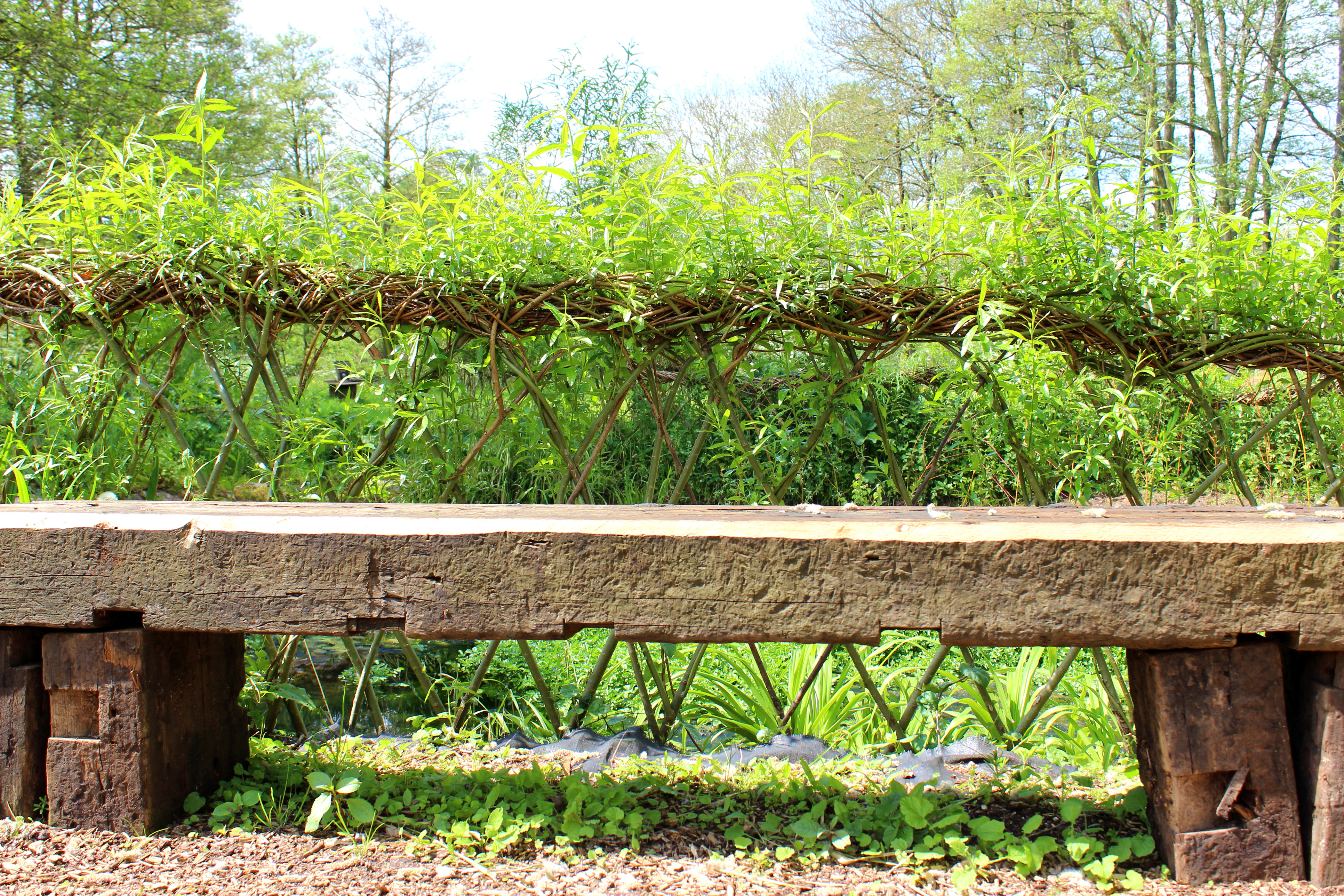
Living willow offers a natural way to create shelter, structure and interest in the garden. Used for domes, tunnels, fedges,/screens and arbour/arches, it responds quickly to care and shaping. Planted thoughtfully and managed well, it becomes a strong, long-lasting feature that changes through the seasons and provides a valuable habitat for wildlife.
Living willow works best when it is given space, light and water, and when it is approached as a living structure rather than a fixed object. With regular annual maintenance, it remains within its intended footprint and continues to perform reliably year after year.
This guide explains where living willow grows best, when to plant it, and how to decide whether it is the right choice for your garden.
Before you plant: Understanding living willow
Living willow is not a tree in the conventional sense. It is a vigorous, fast-growing plant that responds directly to how it is managed. Left alone, it will grow tall and loose. Worked every year, it stays exactly where and how you want it.
Living willow structures do not continue to increase in size if they are woven and pruned annually. Height, width and density are controlled through regular cutting and weaving. The key consideration before planting is not how big it might get, but whether you are prepared to manage it.
If you are considering one of our living willow kits, this annual maintenance is what allows domes, tunnels, fedges and arbours/screens to keep their intended form year after year.
If you would like a deeper, practical understanding of planting, weaving and long-term care, our living willow course offers hands-on guidance in building. number of structures and enables you to make smaller living willow items to take home.
Aspect, light & position
Living willow should always be planted in full sun. Open, bright sites give the strongest, most even growth and allow structures to establish quickly. Willow planted in shade will have restricted growth, take much longer to establish, struggle to thrive, and be more vulnerable to stress and partial dieback over time.
Avoid planting in positions overshadowed by buildings, walls, fences or trees, particularly during winter and early spring when light levels are lower and growth is just beginning.
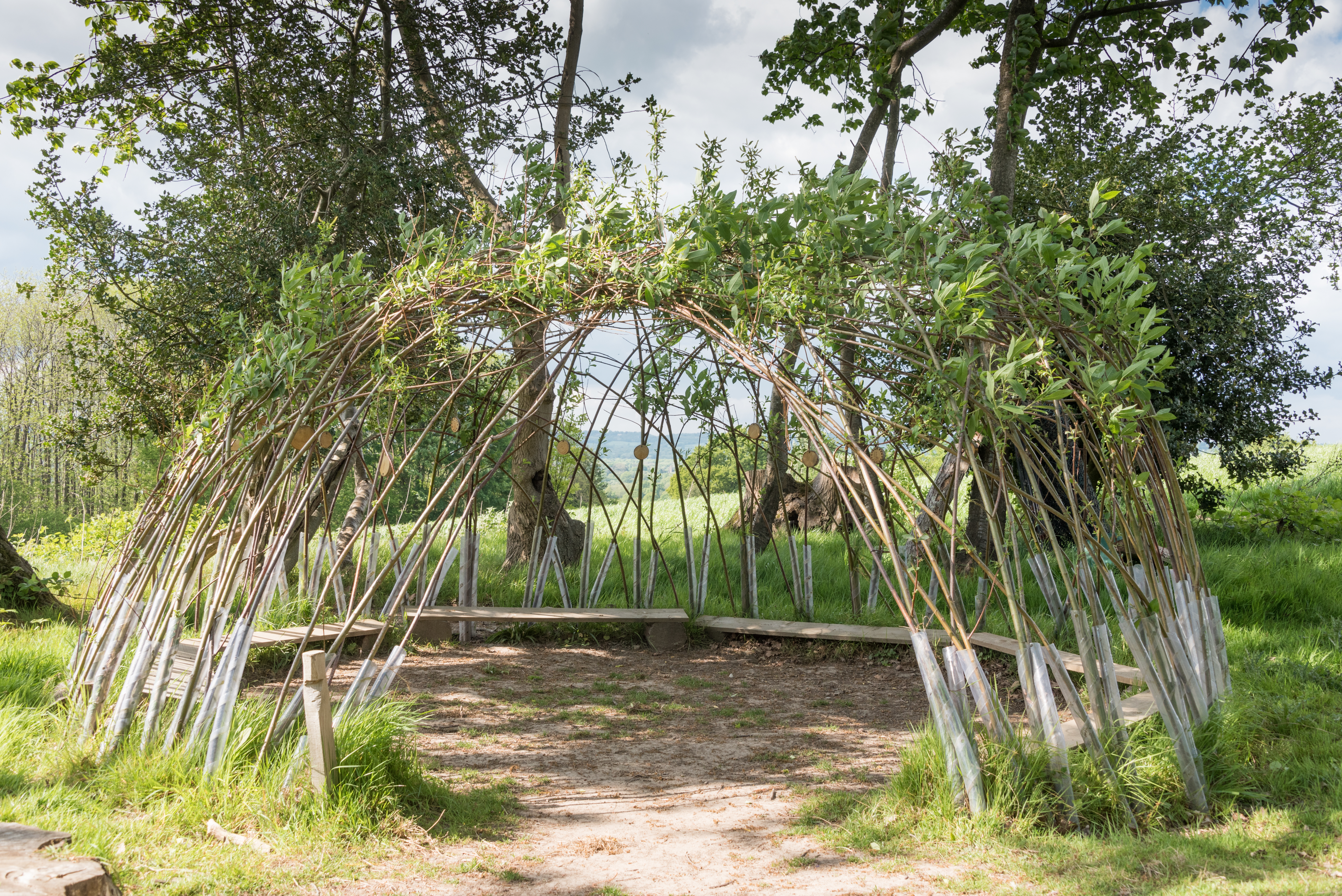
Trees, competition & surroundings
Living willow should not be planted close to established trees, hedges or large shrubs. Competing roots reduce access to water and nutrients and often cause problems for both the willow and the existing tree, once the willow begins to establish properly.
Although a willow structure may appear fine in its first year, competition below ground often leads to slower growth and poor performance in subsequent seasons. Choose a site where the willow is the dominant planting rather than one competing for resources.
Space, access & underground services
Living willow structures do not massively expand outwards when properly managed. Most growth is upwards, and overall size is controlled through annual pruning and weaving. However, space around the structure is still essential.
You need to be able to walk comfortably around it to weave in new growth, prune, mulch and water, particularly during the first few years while the willow is establishing. Planting too close to fences, walls or boundaries often makes maintenance difficult and leads to uneven growth.
It is also important to consider what lies beneath the surface. Living willow should be planted well clear of water pipes, drains and underground services. Willow roots naturally seek moisture, and sensible siting avoids problems later on.
Soil conditions & drainage
Living willow grows best in moist, fertile soils that hold water without becoming waterlogged. A neutral to slightly acidic pH is ideal, and soils with good organic content support the strongest, most even growth. Very free-draining or sandy soils are not suitable for living willow. These soils dry out too quickly, particularly in spring and early summer, making it difficult for newly planted rods to establish, even with regular watering.
Heavy or compacted soils that hold standing water for long periods are also unsuitable. Poor drainage can restrict root development and lead to weak establishment and long-term instability. Avoid planting living willow in ground that is permanently wet, very dry, or compacted. If soil conditions are unsuitable, improving the site or choosing a different location will yield far better results than trying to compensate later.
Water & establishment
Living willow needs plenty of water, particularly when establishing and in its growing seasons.
Newly planted willow should never be allowed to dry out. Regular, deep watering during spring and summer is essential, especially on lighter soils or during dry weather. Mulching around the base helps retain moisture and supports steady, even growth. Once fully established, living willow is resilient and adaptable, but it will always perform best where moisture is reliably available. It does not thrive in boggy, or stagnant conditions.
When to plant living willow?
Living willow should be planted during the dormant season, typically from late November to early March, avoiding frozen or waterlogged ground.
This applies to all living willow kits and individual rods. Planting outside this window significantly reduces success rates.
Ongoing care & long-term commitment
Living willow requires annual maintenance. This includes weaving in new growth, pruning to maintain shape and height, and occasionally replanting or layering to fill gaps. This regular interaction is what gives living willow its strength and longevity. Miss a season or two, and the structure will lose definition, but with attention, it responds quickly and predictably.
If you’d like to see how this works in practice, our YouTube videos show real-life weaving, pruning and maintenance on established structures.

Permanence & removal
Once established, Living willow is difficult to remove. Cut stems will readily regrow, and roots persist unless repeatedly dealt with.
Plant living willow only where you are happy for it to remain long-term.
Why choose living willow?
When planted and managed well, living willow offers practical, lasting benefits:
- creates dappled shade without blocking light completely
- helps define garden spaces naturally
- works as a windbreak or shelter belt
- provides habitat for birds, insects and small animals
- changes through the seasons rather than staying static
It’s particularly effective where you want structure without hard landscaping. As a living structure, it changes through the seasons, bringing movement and variation rather than remaining static. Over time, it also provides valuable habitat, with birds, insects, and small animals using the shelter it offers.
These benefits are most noticeable when willow is planted with intention and cared for regularly.
Is living willow right for my garden?
Living willow is a good choice if:
- You have a sunny, open site
- You’re happy to carry out simple annual maintenance
- You want a long-term, living feature
- You like working with plants rather than fixed structures
It’s probably not suitable if:
- Your garden is very small or heavily shaded
- Access around the structure would be limited
- Regular watering isn’t realistic
- you’re looking for a maintenance-free solution
If you’re unsure, exploring our Living willow kits is a good place to start, as each kit is designed with realistic size, spacing and management in mind.
Considering alternatives
If, after considering space, light and long-term care, you decide that living willow may be too large or too demanding for your garden, there are other options to explore.
Harlequin trees and cloud screens offer structure, light filtration and visual interest on a smaller scale, with different management requirements. You can see how these are planted and maintained in our YouTube videos, which show them in real garden settings.
Starting a willow project? We can help
At Musgrove Willows, we grow more than 60 different varieties of willow on our family farm on the Somerset Levels. We have lots of useful guides on our Help and Advice page about living willow, including:
- A guide to seasonal availability
- What is the difference between living, fresh cut/green, semi-dry and brown (dry) willow?
- How to build a living willow fence/fedge
- How to make a living willow harlequin tree
- How to make a living willow tunnel
- How to make a living willow cloud screen
- How to weave in a willow fedge year 2
- Everything you need to know about building living willow structures
Thinking of taking on a willow project? Why not sign up to one of our willow weaving courses to find out everything you need to know. Contact our friendly team for more information about any of our products.


