
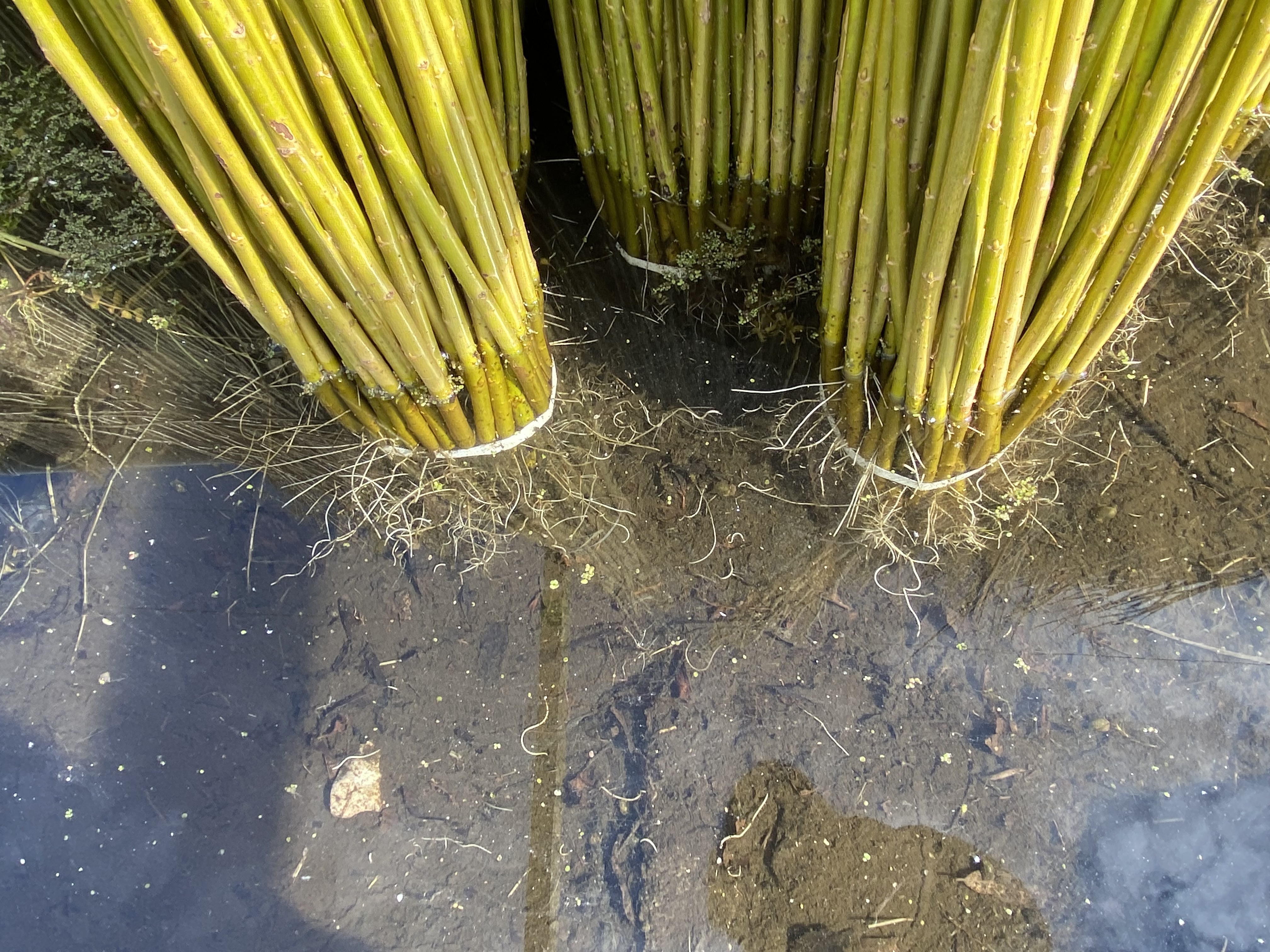
Do not panic!
From time to time, customers notice small roots forming on the butt ends of their living willow rods when they arrive and understandably wonder whether something has gone wrong. In fact, this is quite normal and usually a very good sign. Willow is naturally eager to grow and will often begin producing fine hairlike roots while rods are being stored and transported.
What matters most is how the rods are handled upon arrival.
Unwrap and place straight into water
Although rods are kept in water before dispatch, the cut ends will begin to dry slightly during transport. This is normal, but it means the rods should be unwrapped as soon as they arrive and placed directly in FRESH water.
You can see this process demonstrated in our video here, Unwrapping Willow on Arrival
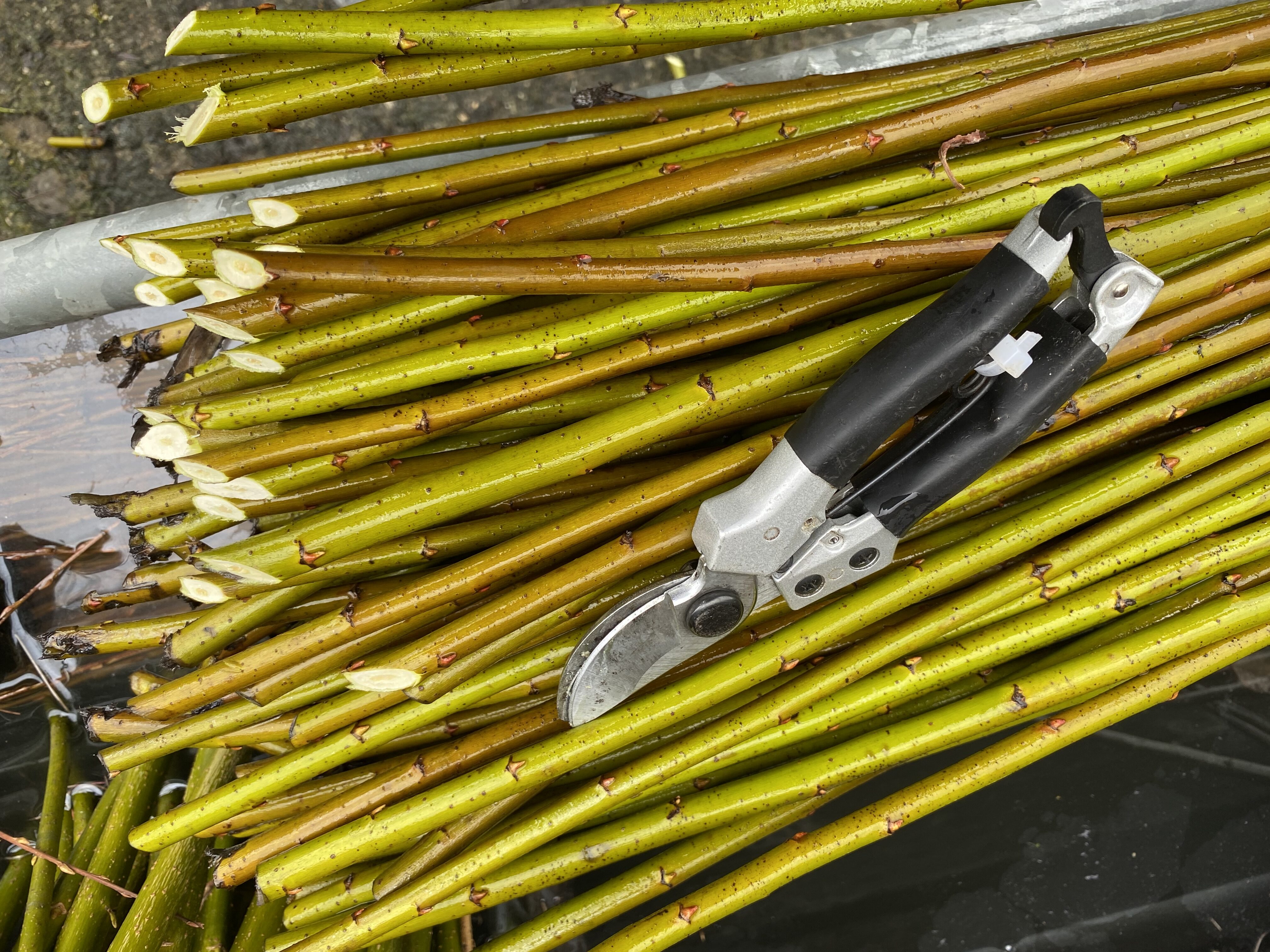
Before placing the rods into water, it is good practice to refresh the butt end with a clean sloping cut using sharp secateurs. It is worth making sure the blades are clean and sterilised first. A simple way to do this is to pour boiling water over them. Remove only a small amount of wood, usually around one to one and a half inches. This removes the slightly dried end that forms during transport and exposes fresh wood so the rod can take up water properly.
The sloping cut also increases the surface area available for the rod to drink. You can normally feel with your thumb whether you have taken enough off. The end should feel fresh and moist, not dry.
Once cut, stand the rods in water so they can have a good drink before planting. Ideally, they should remain in water for around forty-eight hours. When you are ready to plant, take the rods straight from the water and plant them straight away so the butt does not have an opportunity to dry.
If you need to keep the rods for longer before planting, ensure they are kept in fresh water until needed.
If your rods have roots
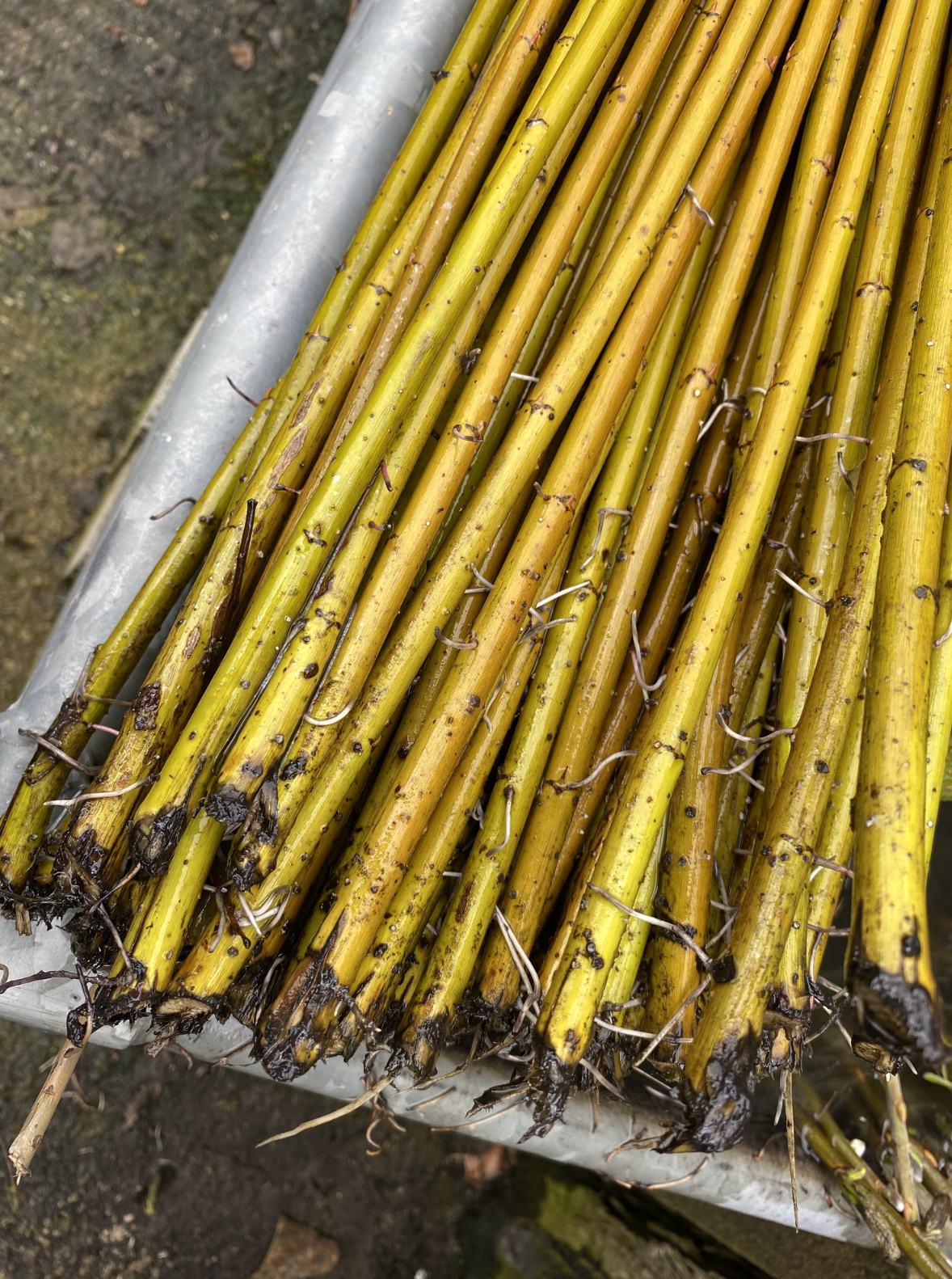
If rots have begun to form, they will usually appear within the first six to eight inches of the butt of the rod. This is exactly the section that will sit below ground once planted.
Where possible, it is best to leave these roots in place. They are usually very fine and fragile and may get damaged during planting, but they give the plant a useful head start.
The main thing to avoid is simply forcing the rod straight into the ground. Doing so will usually scrape off any roots that have formed.
Instead, create space for the rod first.
Two simple approaches work well.
- Cut a narrow trench, place the rod into position and gently backfill the soil around it.
- Use a spare rod, stick or metal bar to make a pilot hole before planting.
The hole only needs to be slightly larger than the rod itself. Wiggle the stick or bar to loosen the soil, then place the rod gently, then firm the soil back around it.
Planting depth should be around six to eight inches so that the rooting section is well buried and in good contact with the soil.
Even if some roots are lost during planting, the rod will quickly produce more. Willow is extremely vigorous. Protecting the roots already there helps the plant establish itself more quickly.
Feeding newly planted willow
It can be tempting to add rich compost or strong fertiliser at the time of planting. In most cases, this is unnecessary and can sometimes work against you.
When plants are surrounded by a pocket of very rich compost, they often concentrate their roots in that area rather than spreading out into the surrounding soil. What you want instead is for the roots to travel outward and establish themselves properly in the ground.
For that reason, we generally recommend planting living willow directly into the soil rather than into heavily fertilised compost.
Once growth begins, you can support the plants with occasional liquid feeding if you wish. A diluted liquid fertiliser such as tomato feed works well because it provides gentle nutrients without overwhelming newly forming roots.
Too much fertiliser early on, particularly strong feeds, can damage delicate young roots.
Seeing it in practice
If you would like to see living willow being planted and shaped into trees, these videos show the process clearly.
Both demonstrate the same principles: placing the rods in water, planting depth, and careful handling of the rods.
After Planting Care
Once planted, newly set willow needs consistent moisture while it establishes. During the first growing season, it is important to water regularly, especially during dry or windy weather when moisture is quickly drawn from the soil. The aim is to keep the ground evenly moist so the rods can produce strong roots and steady new growth.
Water thoroughly so moisture reaches the roots, not just the surface. Check the soil regularly and top up whenever it begins to dry. The soil should remain moist but never waterlogged.
The first year is the key period when the young plants are forming their root systems and putting on their first growth. Good watering at this stage helps create strong, healthy plants that will establish quickly and perform well in the years that follow.
A final word
Willow is one of the most forgiving and enthusiastic plants you can grow. With moisture, good soil contact and a little patience it will establish quickly and begin producing new shoots in no time.
If you are just beginning with living willow, you may also find the rest of our Living Willow Help and Advice pages useful. They cover planting, shaping, aftercare and seasonal maintenance.
You may also enjoy learning these techniques in person. Our Living Willow Structures for the Garden Course will guide you through planting and creating structures step by step.
With a little care at the beginning, willow will reward you quickly. It is a wonderful material to grow and work with.


