
Incorporating willow fencing into garden designs: Technical facts for architects and garden designers
15 July 2026

Designing a garden is no small task. Professional garden designers and architects ensure that every outdoor space they design is biodiverse, beautiful, and sustainable – from large commercial or public installations to individual private gardens.
At Musgrove Willows, we know that willow fencing is a fantastic asset to any garden design. Our willow fencing is made from willow grown using traditional, environmentally conscious farming methods on our 200-acre Somerset farm. It is a fully renewable crop that we harvest annually, making our willow fencing a sustainable garden design choice.
With the proper installation and care, willow fencing can last for years to come, add a pleasing natural aesthetic to a garden, and elevate outdoor spaces both big and small.
Willow fencing in garden design
1. Types of fencing
There are several different styles of willow fencing to choose from, and each lend themselves to different types of garden design. We make three different willow fencing styles, each panel handcrafted on our farm by our expert weavers.
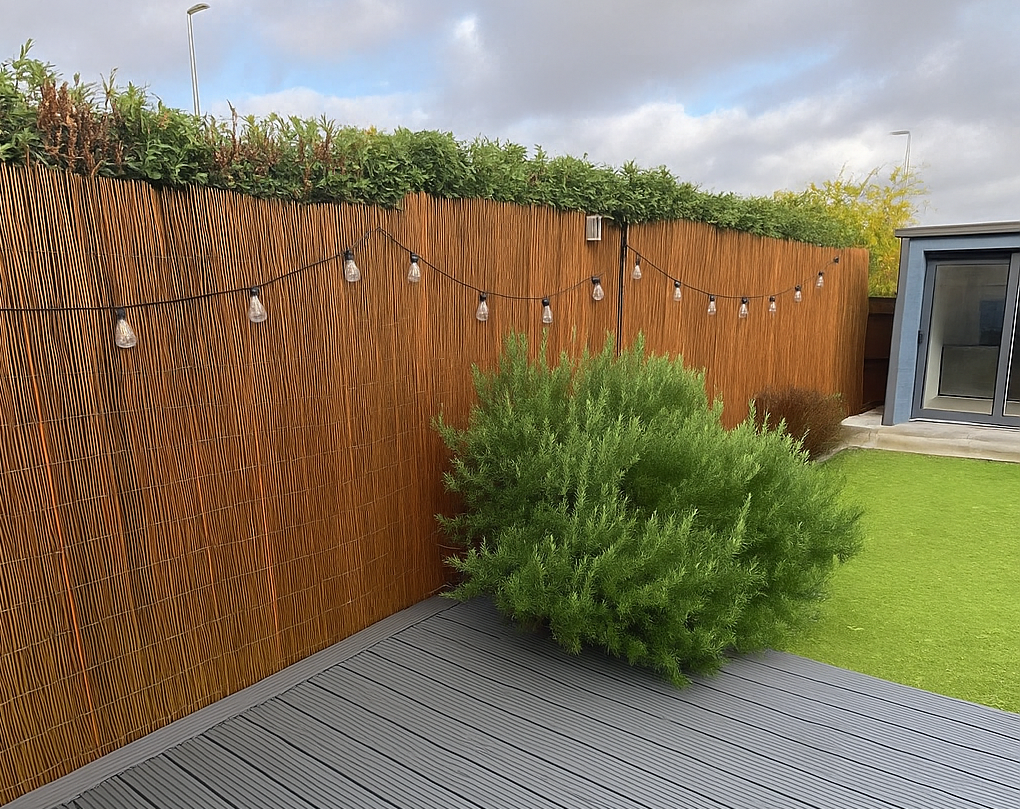
Roll fencing (screening)
Willow roll fencing is the perfect all-rounder, ideal for fencing an entire garden, or creating zones and screened areas. It can be attached easily attached to fence uprights or wire fencing using ties or staples. The clean, natural aesthetic of willow roll fencing fits beautifully into modern and rustic gardens alike.
- Aesthetic: Modern appearance, also suited to rustic gardens
- Standard sizes: 3m wide, available in heights from 1m to 2m
- Best for: Zoning distinct garden areas and disguising unsightly existing walls or structures
- Wind permeability: High (allows maximum airflow)
Ribbon willow fencing
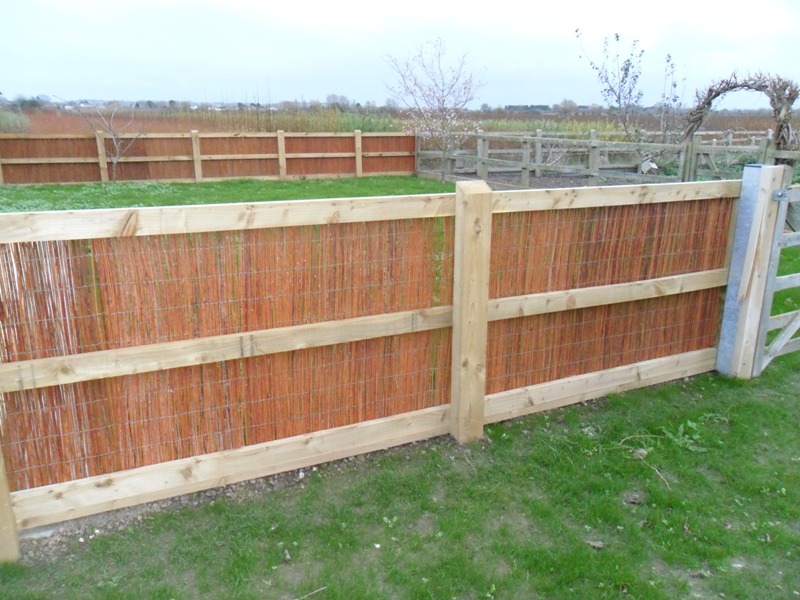
For rural garden designs, ribbon willow fencing is a fantastic choice. These handwoven panels are based on the traditional willow fencing historically used to corral animals, woven from willow with the bark left on to aid longevity.
- Aesthetic: Traditional and rustic with a rugged texture
- Standard sizes: 6ft wide, available in heights from 3ft to 6ft
- Best for: Rural landscapes, perimeter boundaries, and cottage gardens
- Wind permeability: Medium

Framed willow fencing
Clean, classic, and contemporary, framed willow fencing is favoured for its strength and durability. Eye-catching and beautiful, it adds seclusion and privacy to any garden design. Every framed willow panel we make is woven from high-quality, hand-graded willow rods and framed with strong, treated wooden battens.
For a slightly different look, these fence panels are also available with a decorative 1ft trellis – perfect for adding rustic greenery or colourful flowers to a garden design.
- Aesthetic: Contemporary and neat, structured, clean-lined
- Standard sizes: 6ft wide, available in heights from 2ft to 6ft
- Best for: Residential privacy, premium garden designs, and secure screening
- Wind permeability: Medium to low (highly secure, engineered to be completely storm-safe)

2. Wind protection and privacy
When designing a garden in a windy or exposed area, willow fencing is a smart choice. Whilst willow fences are tightly woven enough to ensure privacy and protect gardens from the elements, the gaps in the weave construction of each panel naturally allow some wind to pass through. This helps willow fencing remain upright and stable, even during storms and high winds.
By contrast, the gaps in the weave also allow hot air to escape from gardens on warmer days, in turn inviting cooler, fresher air in – keeping a garden temperate and enjoyable to be in all year round.
3. Installation
To install willow fencing in a garden, fence posts are needed. These should be installed in the ground deeply and at regular intervals along any fencing boundary (ideally at least every 2m). Postcrete or a similar concrete product should also be used where needed to ensure every fence post is extremely stable.
Willow fence panels can either be attached in front of or in-between fence posts by screwing the panels directly into the posts. Alternatively, willow roll fencing can be attached to wire fencing or fence posts using galvanised wire or cable ties.
4. Durability and preservation
Prolonging the life of any willow fence in a garden design is essential. This can be done by treating a willow fence using a mixture of boiled linseed oil and turpentine. A suitable mixture is our Fence Panel Protector, which should cover up to four 6ft x 6ft willow fence panels.
For the best results, a willow fence should be treated up to twice a year. This can be done using:
- A brush: Using equal amount of boiled linseed oil and turpentine, stir the mixture and carefully apply to both sides of a fence panel.
- A spray bottle: Add slightly more turpentine to your mixture and give your spray bottle a good shake to mix it well. Spray both sides of a fence panel with liberal amounts of the mixture – there is no need to brush it in.
The fence panels will be sticky to the touch for a couple of weeks whilst the treatment soaks in.
Planning a garden design? We can help
If you’re curious about incorporating willow into a garden design, Musgrove Willows can help. We work directly with landscape architects and garden designers to supply willow fencing, including bespoke sizes, bulk trade orders, and technical advice. Please just get in touch with the team with any questions, we’d love to hear from you.


