
Which willow cleave should I choose?
7 September 2026
 Which willow cleave should I choose?
A cleave is a traditional basketmaking tool used to split a willow rod lengthways, usually as the first stage in preparing skeins for basketry.
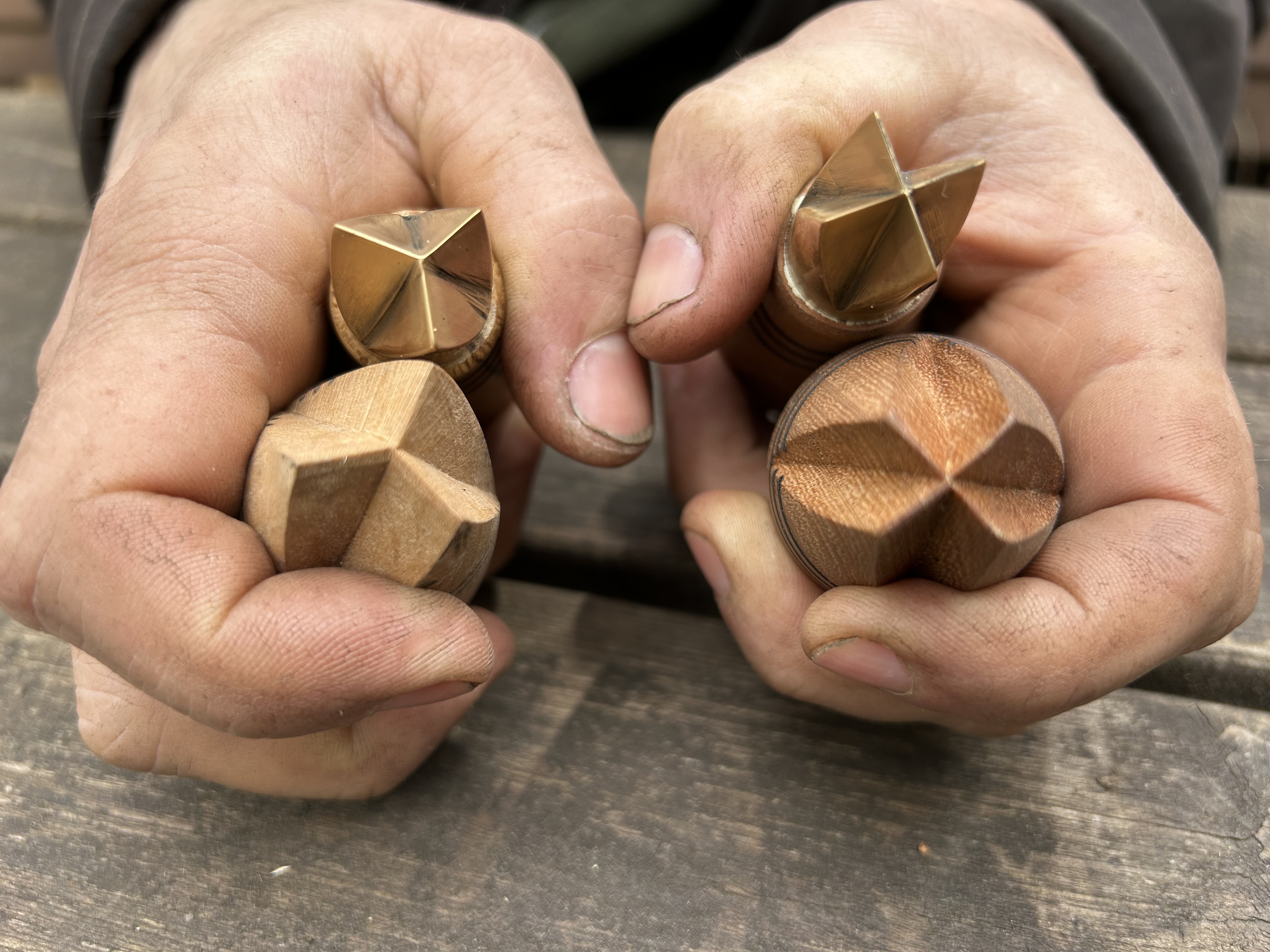
Cleaves come in different shapes and sizes, with three or four sloping surfaces and with either wooden or brass tips. They all perform essentially the same job, but the one you choose will depend on the size of the willow you are working with, the size of the split material you want to produce and how you prefer to hold the tool.
If you are new to cleaving willow, take a look at our How to use a cleave video.
What does a cleave do?
A cleave allows a willow rod to be split along its length into three or four sections.
The split is first started at the butt end of the rod using a sharp straight knife. The cleave is then inserted into the cuts and worked along the rod, with the sloping surfaces separating the sections.
The cleave also gives you control over the running of the split. Willow is a natural material and variations within the rod can cause one section to become thicker while another becomes thinner. By adjusting the position of the cleave and the pressure on the individual sections as you work, you can guide the split and keep the resulting pieces as even as possible.
These split sections can then be processed further using a willow shave and upright trimmer to produce skeins of the required thickness and width.
Three-way or four-way cleave?
The basic difference is very simple.
A three-way cleave splits a rod into three sections, while a four-way cleave splits it into four.
Both are traditional basketmaking tools, and neither is automatically the better choice. What matters is the size of your original rod and the material you want to produce from it.
Split the same rod into three, and you will have three relatively wider sections. Split it into four, and you will have four narrower sections.
This means the choice between a three-way and four-way cleave can vary from job to job. You may well find that having both becomes useful if you regularly prepare your own skeins.
Starting the split
There is a practical difference when initially dividing the butt of the rod.
Starting a four-way split is relatively straightforward to mark out. Two cuts crossing through the centre divide the butt into four approximately equal sections.
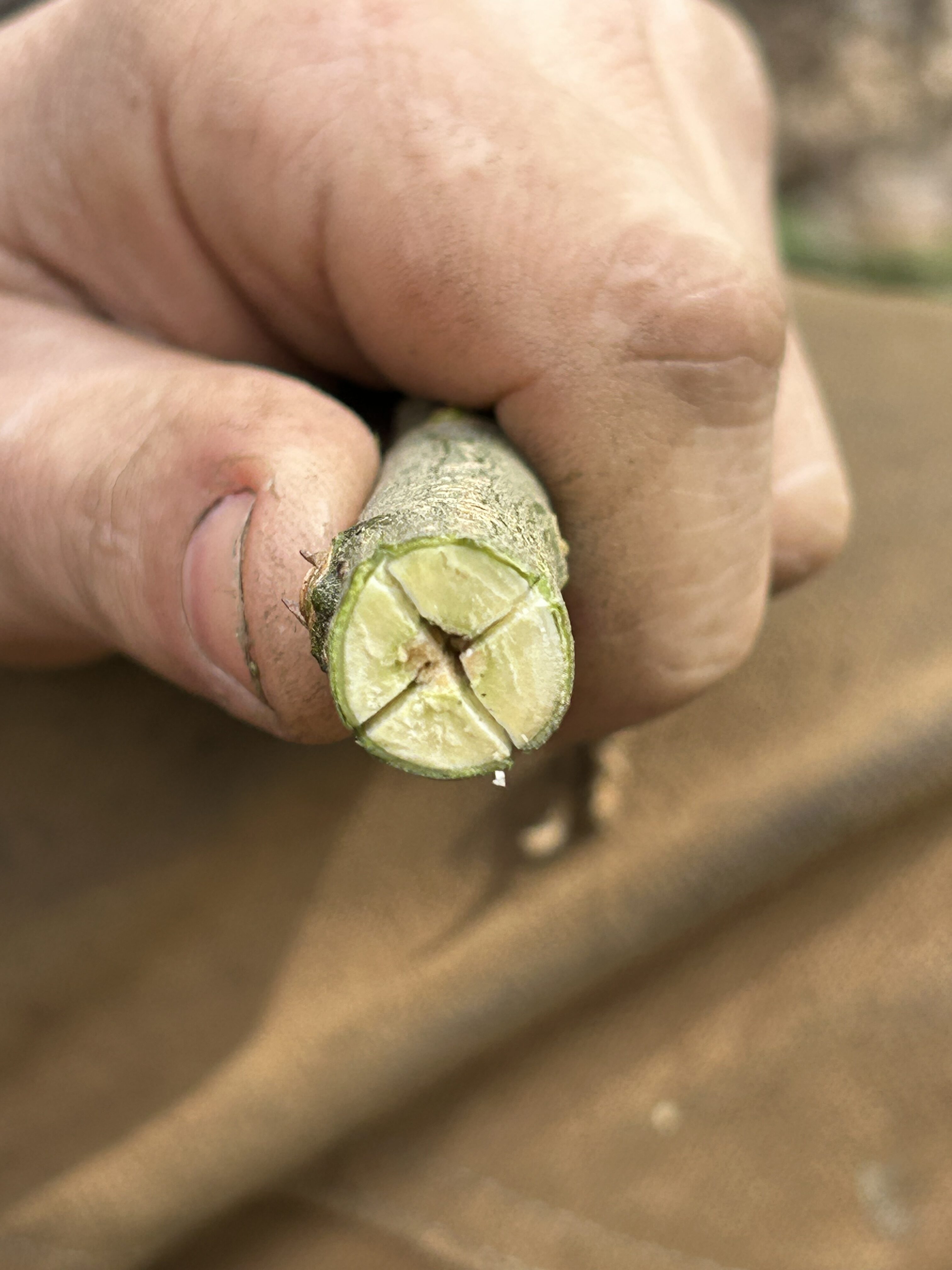
Dividing a circular rod accurately into three takes a little more judgement, as you need to position three cuts to create three reasonably equal sections.
They don’t need to be mathematically perfect. The important part is learning to control the split as it runs along the rod and making adjustments as you go.
Short or long cleave?
The next choice is the shape and length of the cleave, which largely depends on how you prefer to hold your tool.
Our shorter Classic English cleaves are approximately 6 cm long and have a rounded, egg-shaped form. They are designed to sit within the palm of the hand, which some basketmakers find gives them a very direct feel for the split.
Our longer Continental-style cleaves are approximately 10 cm long and can be held more fully in the hand. They can be particularly comfortable for larger hands, but hand size isn’t the only consideration. Some people simply prefer one way of holding and controlling a cleave over the other.
There isn’t a right or wrong choice. A cleave is a very tactile tool, and the best shape is the one that feels comfortable and controllable in your hand.
Wooden or brass tip?
Traditional wooden-tipped cleaves remain perfectly effective tools for splitting willow.
When using a wooden cleave, start the split at the butt end of the rod with a sharp knife before introducing the cleave. This allows the cleave to enter the rod cleanly without damaging the edges of the wooden tool.
As with any wooden tool, regular use will eventually cause some wear, particularly at the working end.
Our brass-tipped cleaves offer greater durability. The brass protects the working end of the cleave and will withstand considerably more wear, making it a particularly good choice if you prepare a lot of split willow or regularly work with heavier material.
Both wooden and brass-tipped cleaves work on exactly the same principle, so this choice is primarily about how much use the tool is likely to receive and how long you want it to last.
So which cleave should I choose?
There isn’t one cleave that is right for everybody.
Choose between a three-way and four-way cleave according to the size of your original rod and the width of the sections you want to produce.
Choose a shorter Classic English cleave if you prefer the tool to sit within your palm, or the longer Continental style if you prefer to hold it more fully in your hand.
Finally, choose between a traditional wooden cleave and the additional durability of a brass-tipped version.
We stock:
3-way cleaves with wooden tips
4-way cleaves with wooden tips
All made for us by Dave Budd. Our wooden cleaves are available in both Classic English and Continental styles.
From rod to skein
Cleaving is the first stage in turning a whole willow rod into a finished skein.
After starting the cuts with a sharp straight knife, the cleave divides the rod lengthways into three or four sections.
Each section can then be passed through a willow shave to remove material from the inside and reduce it to an even thickness. If a narrower, consistently sized skein is required, an upright trimmer can then be used to trim it to an even width.
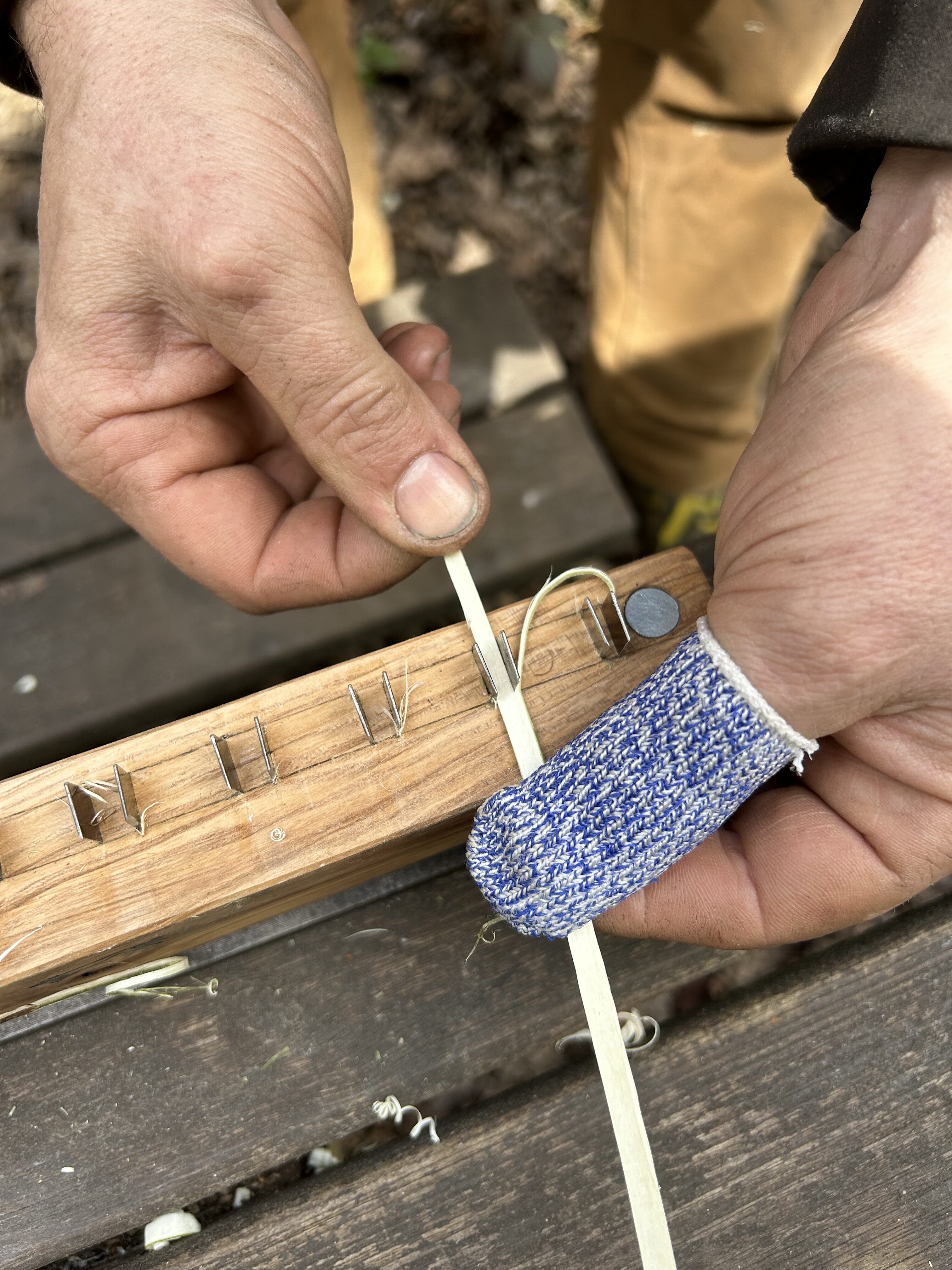
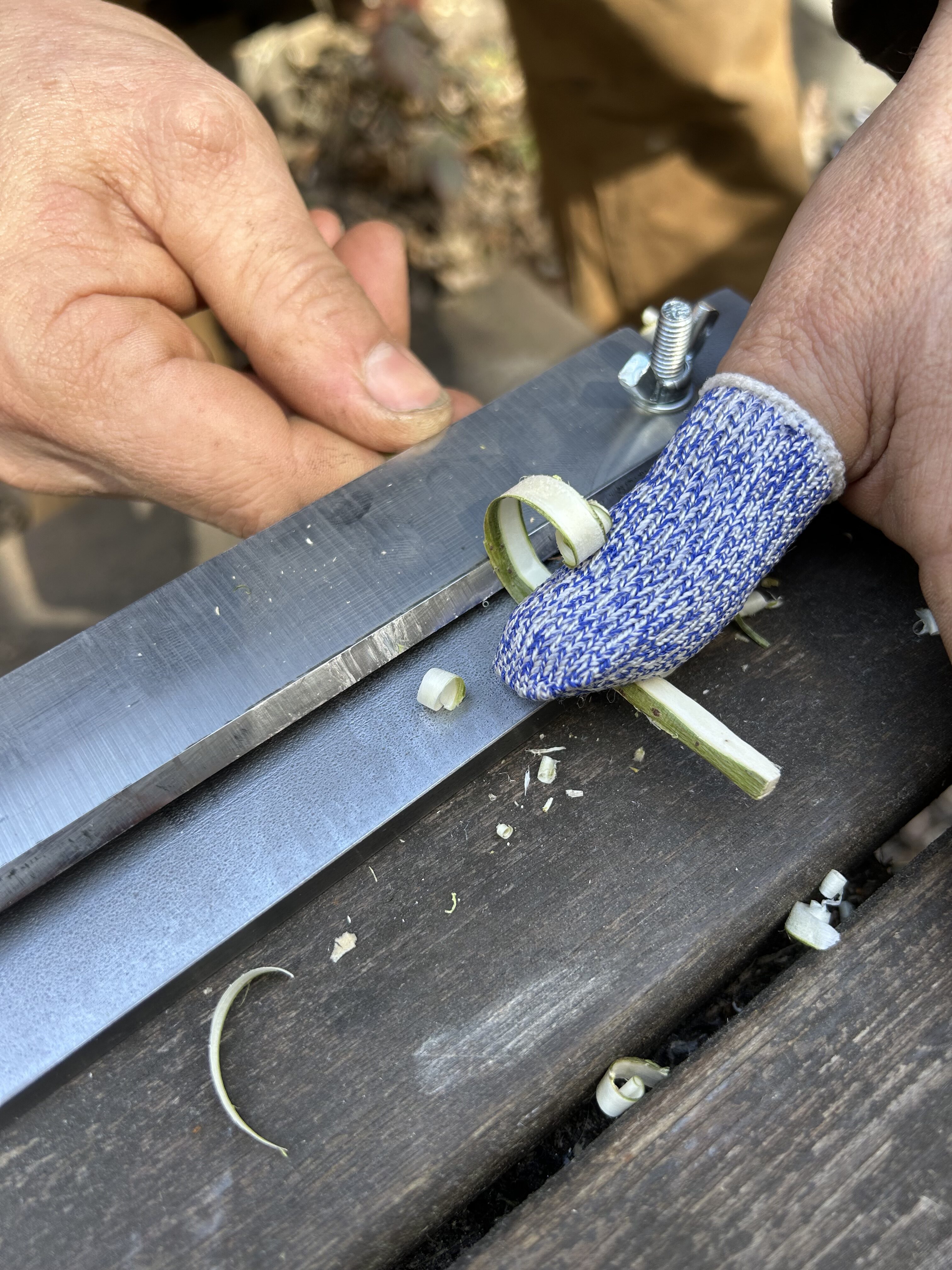
For more information about the actual cleaving technique, including how to control a split as it runs along a rod, see our How to use a cleave guide and video.
A simple tool with a skilled job
The cleave itself is wonderfully simple. The skill lies in learning to read the willow, feel how the split is running and make the small adjustments needed to keep it under control.
Three-way or four-way, short or long, wooden or brass, they are all variations on a traditional tool that has been used by basketmakers for generations.
The best choice is ultimately the one that suits your hand, the willow you are working with and the skeins you want to produce.
Want to learn how to use your tools?
Nothing quite beats face-to-face help and advice. If you would like to get to grips with cleaves and the other tools in a basketmaker’s toolkit, why not join us for our Skills – Basketmakers Tools and Toolkit course ( a perfect companion to our Skills – Willow -Getting to Know your Material course
We look at the different tools used in basketmaking, what they are for, how to choose the right tool for the job and, most importantly, how to use them correctly and safely.
It’s a great opportunity to handle and try different tools, ask questions and build the confidence to use them properly in your own basketmaking.
More Help & Advice
Top 10 tools every willow weaver needs


