
A beginner’s guide to willow fencing
28 May 2026
Interested in willow fencing for your outdoor space? If you’re a beginner with willow fencing, it can be hard to know where to start. At Musgrove Willows, we want everyone to feel confident to embark on their willow journey – and we’re passionate about helping first-time willow fence buyers to make their project a success.
Choosing a willow fence
Step one is working out the best type of willow fence for the project you have in mind. We stock a range of different fence styles and sizes, handcrafted using willow grown here on our Somerset farm.
Willow roll fencing (screening)
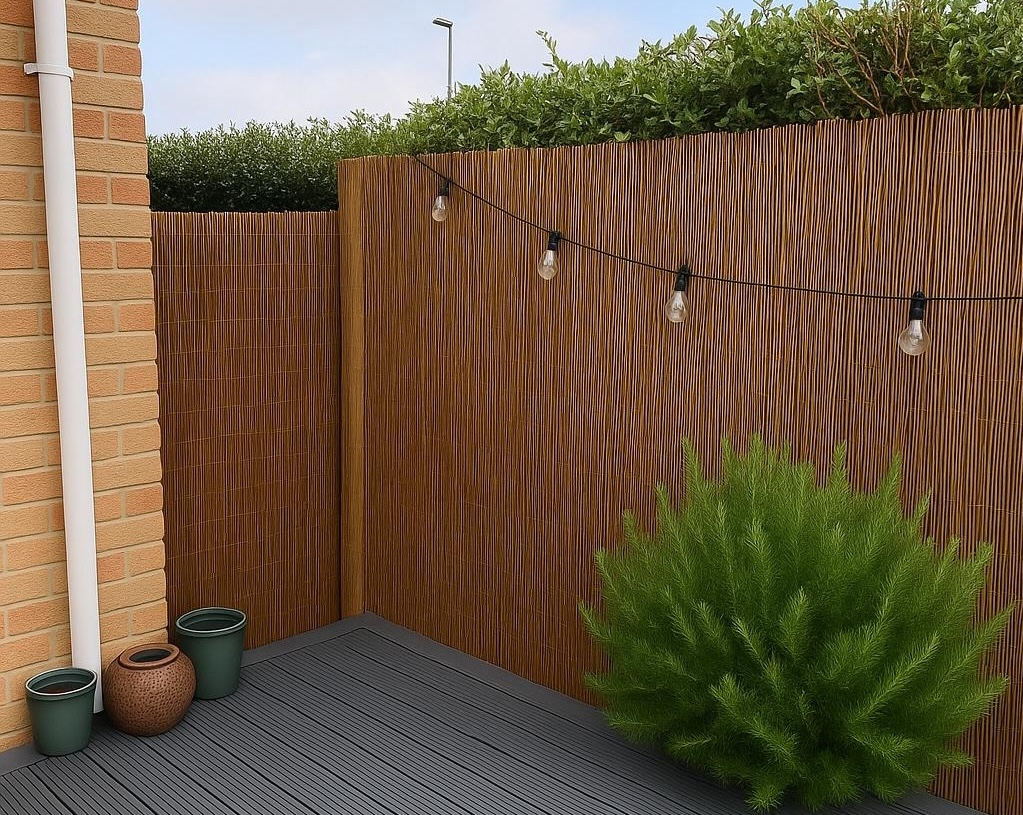
Our willow roll fencing is ideal for screening certain areas of your outdoor space for privacy, or creating an attractive barrier to unsightly areas (e.g. refuse bins, compost heaps, chain-link fencing). You can also use roll fencing to create different zones or as a covering for arbours and pergolas. It can be easily attached to fence uprights using staples or ties.
We stock 3m wide willow roll fencing in heights of 1m, 1.5m, and 2m.
Ribbon willow fencing
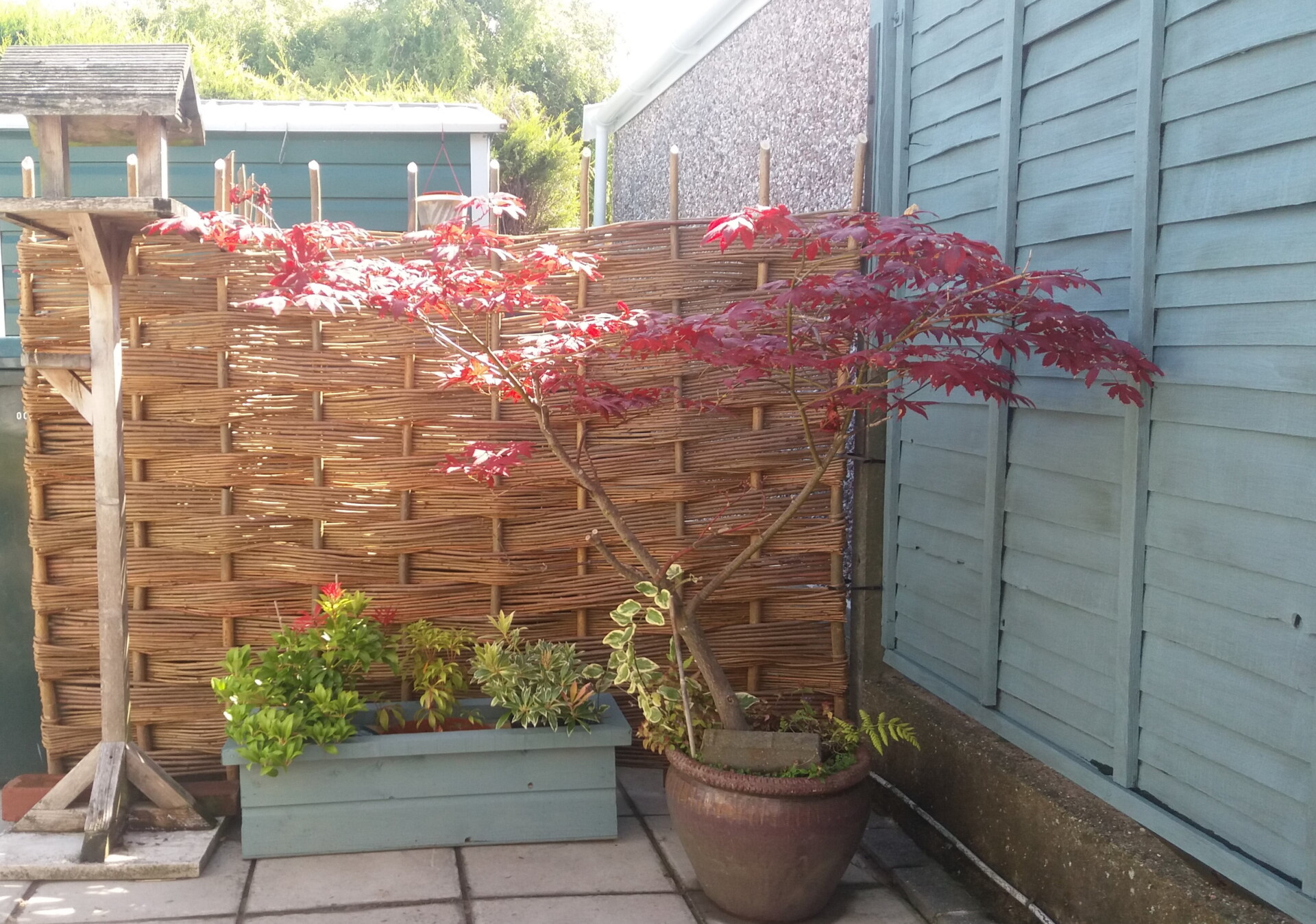
If you fancy a more rustic look for your outdoor space, ribbon willow fencing is an excellent option. Each panel is handwoven by our skilled weavers, using only hand-graded willow of the highest quality. The bark is left on the willow to extend its lifespan.
Our ribbon willow fencing is usually made to order. We offer 6ft wide panels in a range of different heights.

Framed willow fencing
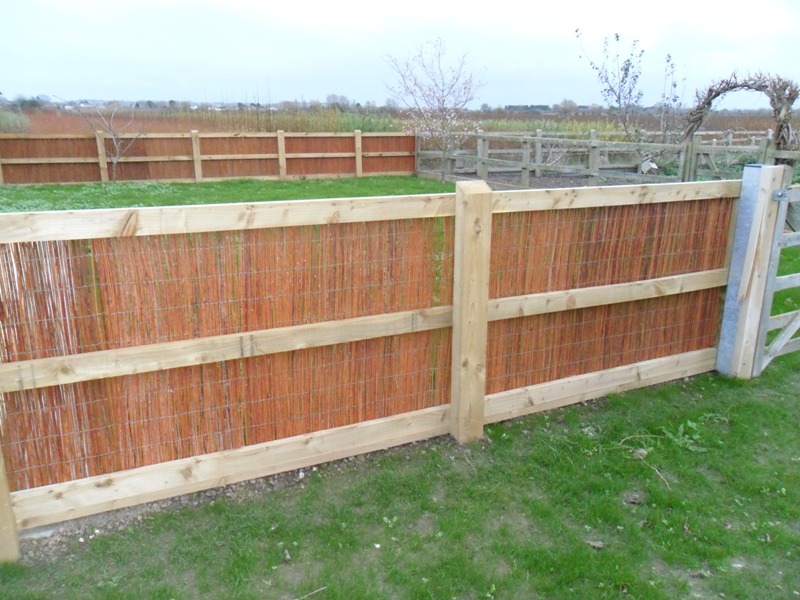
For a classic, timeless look, framed willow fence panels elevate any outdoor space. Made using treated wooden battens and high-quality woven willow rods, these fence panels are durable and strong – ideal for creating privacy fencing.

Simple to attach to wooden or concrete fence posts, our framed willow fence panels are 6ft wide and available in a range of heights. We also offer framed willow fence panels topped with a 1ft trellis for a different look, easy to decorate with climbing plants and flowers.

Planning and installing and willow fence
Once you’ve decided which style of willow fence you want for your project, it’s time to plan your fencing boundary and install your willow fencing.
1. Plan your boundary and order your fencing
You should precisely plan and measure out where your willow fencing will go before ordering it, as this will determine how much willow fencing you should order. It’s also good to mark out the locations for each of your fence posts.
If you require unusual sizes for your fencing boundary, we can help. Musgrove Willows supply made-to-measure willow fencing in ribbon and framed styles.
2. Install your fence posts
Fence posts can be purchased from most garden centres and DIY stores. When deciding what size fence posts to purchase, you should consider:
- Whether you want wooden or concrete fence posts (you can use round or square posts).
- The height of your fence panels.
- Whether your fence panels will be going in front or in-between your fence posts (some concrete posts have channels along their sides that panels slot into).
- How much of the posts you want to be visible above your fence.
- Leaving a ground gap of a few inches to stop the bottom of your willow fence from rotting (alternatively, you can install your fence at ground level on gravel).
- How far you want to bury each post into the ground.
Ensure your posts are installed deeply in the ground at regular intervals along your fencing boundary (at least every 2m), and make sure each post is stable – Postcrete or a similar concrete product can be used where needed.
3. Install your willow fence panels
Once all your fence posts are securely in place, you can then attach each of your willow fence panels either in front or in-between the posts. This can be done by screwing fence panels directly into fence posts. Willow roll fencing can be attached to fence posts or wire fencing using galvanised wire or cable ties.
4. Maintain your willow fence
Keep your willow looking beautiful for years to come by maintaining it. Treat it once or twice a year with a top quality Fence Panel Protector (a 50/50 mixture of boiled linseed oil and turpentine) or Protek.
Apply the treatment with a brush or spray bottle; your fencing will be sticky to the touch for the next week or two whilst the treatment soaks into the willow.
Supporting you on your willow fencing journey
Musgrove Willows are the willow fence supplier of choice for our customers – and we want to support first-time fencing buyers on their willow journey.
If you need some tools our Beginner Tool Kit might be ideal for you.
See what other tools we have here.
See what other beginner projects are available in our How-to section.
We have lots of useful advice and insights on our Fencing Help and Advice page. Please get in touch with the Musgrove team if you have any questions about our willow fencing, willow weaving courses, or other products – we’re always happy to help.


