
Mould on stored willow rods - What causes it & how to clean it
16 March 2026
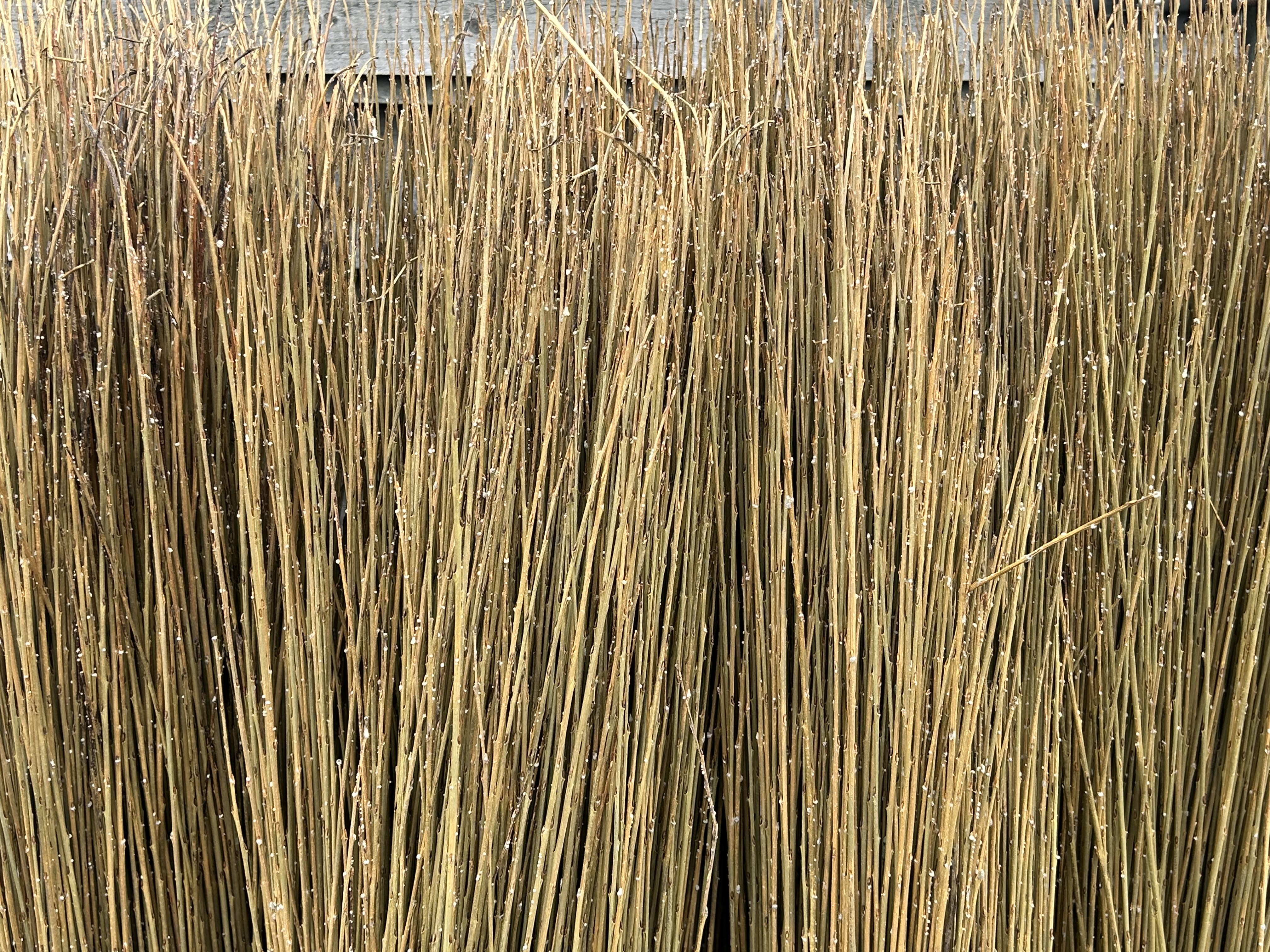 Occasionally, customers discover mould on willow rods (usually on the buds) that have been in storage for some time. This can appear as white, grey, blue or green fuzzy growth, or sometimes as dark spotting on the bark. While it can look alarming, mould on willow rods is usually caused by storage conditions rather than anything unusual in the willow itself, and in most cases the rods can still be cleaned and used without difficulty.
Many mould problems begin with storage conditions. Our guide to storing dried willow explains how to store rods safely and reduce the risk of mould developing.
Basketry willow is a natural material grown outdoors and harvested during the winter months. Once dried, rods can be stored for long periods, but willow readily absorbs and retains moisture from the surrounding air. Even when rods appear dry on the surface, moisture can remain within the rod or beneath the bark. In cool, still or slightly damp conditions this moisture can allow surface moulds to develop.
Mould can develop on any stored willow if conditions allow. Storage conditions such as still air, dampness and temperature changes are usually far more important than whether the rods are bark on or bark stripped.
Recent seasons with wet winters and mild conditions have also increased the likelihood of mould appearing in stores. Wet, mild winters are the highest risk. Dry, cold winters are generally the safest for stored willow.
Different mould colours on willow
Surface moulds on stored willow can appear in several colours.
White moulds often appear as powdery or lightly fluffy patches on the bark and are usually early surface growths.
Grey moulds may form a soft dusty coating across rods stored in damp conditions with poor ventilation.
Blue or green moulds often appear as small patches or fuzzy bloom and are commonly associated with Penicillium type moulds that develop where dampness has persisted for longer.
Black spotting or dark mildew can appear after repeated damp cycles in storage and may stain the bark permanently. Buff and white willow with extensive black mould on it, is often unusable .
Although the appearance varies, these moulds usually develop for the same reason: moisture combined with poor airflow around stored rods.
Did the mould come with the willow?
No. Willow leaves the farm fully dried before dispatch.
Surface mould develops after storage when natural fungal spores present in the air begin to grow on the bark if conditions allow. These spores are present everywhere in the environment and are not specific to willow.
Even buildings that appear dry can occasionally support mould growth, particularly when airflow is limited or temperatures fluctuate. Uninsulated sheds, garages and outbuildings can sometimes create the right conditions, especially during mild, damp winters.
Is the willow still usable?
If treated early, in most cases yes.
Most mould seen on stored willow is superficial and sits on the bark rather than affecting the structure of the rod. Provided the rods remain firm and the wood itself has not softened or begun to break down, they can usually be cleaned and used without difficulty.
The main issue is cosmetic staining, particularly on buff or white willow. If mould is noticed, it is best dealt with promptly before it spreads further through the bundles.
Cleaning mould from willow rods
If mould appears, the rods can usually be cleaned and dried again. It is best dealt with promptly before it spreads through neighbouring bundles.
- Take the bundles outside, loosen them slightly and brush the rods down with a stiff brush to remove as much mould as possible. When doing this, it is sensible to wear a dust mask, as mould spores can become airborne when disturbed and can be unpleasant to breathe in.
- Do not soak the rods in neat vinegar. Instead, dilute ordinary white vinegar 1:1 with water and apply it lightly using a spray bottle or cloth.
- After wiping the rods down, give them a quick dunk in clean water to remove any residual vinegar. Please be aware that vinegar can occasionally cause staining of the rods, particularly on buff or white willow.
- Once cleaned, spread the rods out in a well-ventilated area and allow them to dry thoroughly before storing again.
Where possible, it is often best simply to use the rods rather than returning them to long-term storage.
Check nearby bundles
If mould appears on one bundle, it is sensible to keep an eye on the other willow stored nearby.
It is not usually necessary to treat everything unless mould is visible, but early attention helps prevent it from spreading further.
Preventing mould in stored willow
The key to storing willow successfully is airflow.
- Rods should always be completely dry before storage, raised off the ground and loosely stacked so air can circulate around them.
- Bundles should ideally be covered only on the top to shed rain while remaining open on the sides so moisture cannot become trapped.
- Cool, damp buildings with still air can occasionally allow mould to form even when the rods were dry when stored.
- Regularly checking stored willow and turning bundles during long storage periods can help catch any issues early.


